
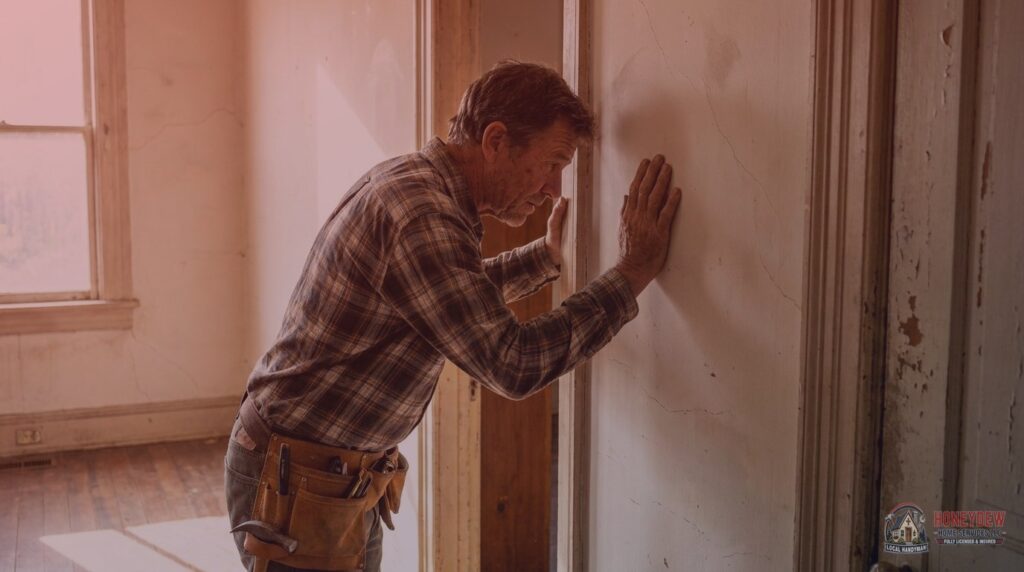
Middle Georgia’s humid subtropical climate, aging housing stock, and shifting clay soil create drywall problems that look minor but grow expensive fast. Kenny Neville’s licensed handyman team repairs the same five neglected drywall issues in McDonough and surrounding homes, usually after months of quiet damage. Catching these drywall problems early keeps the repair small and the bill smaller.
Why do cracks keep appearing at the corners of doors and windows in Middle Georgia homes?
Hairline cracks at window and door corners are caused by clay soil expansion and contraction beneath Middle Georgia foundations. The soil swells when wet and shrinks when dry, and each seasonal shift stresses the home’s frame at its weakest points, the corners of door and window openings.
GeoStabilization International describes Georgia’s Piedmont region, which stretches from Atlanta through Columbus and Macon, as sitting atop residual soils rich in high-plasticity clay minerals that swell when saturated and shrink during drought. The Virginia Department of Energy’s Division of Geology and Mineral Resources reports that expansive soils damage an estimated 25% of all homes in the United States, with property losses in a typical year exceeding those from earthquakes, floods, hurricanes, and tornadoes combined. Middle Georgia sits squarely inside that Piedmont clay belt.
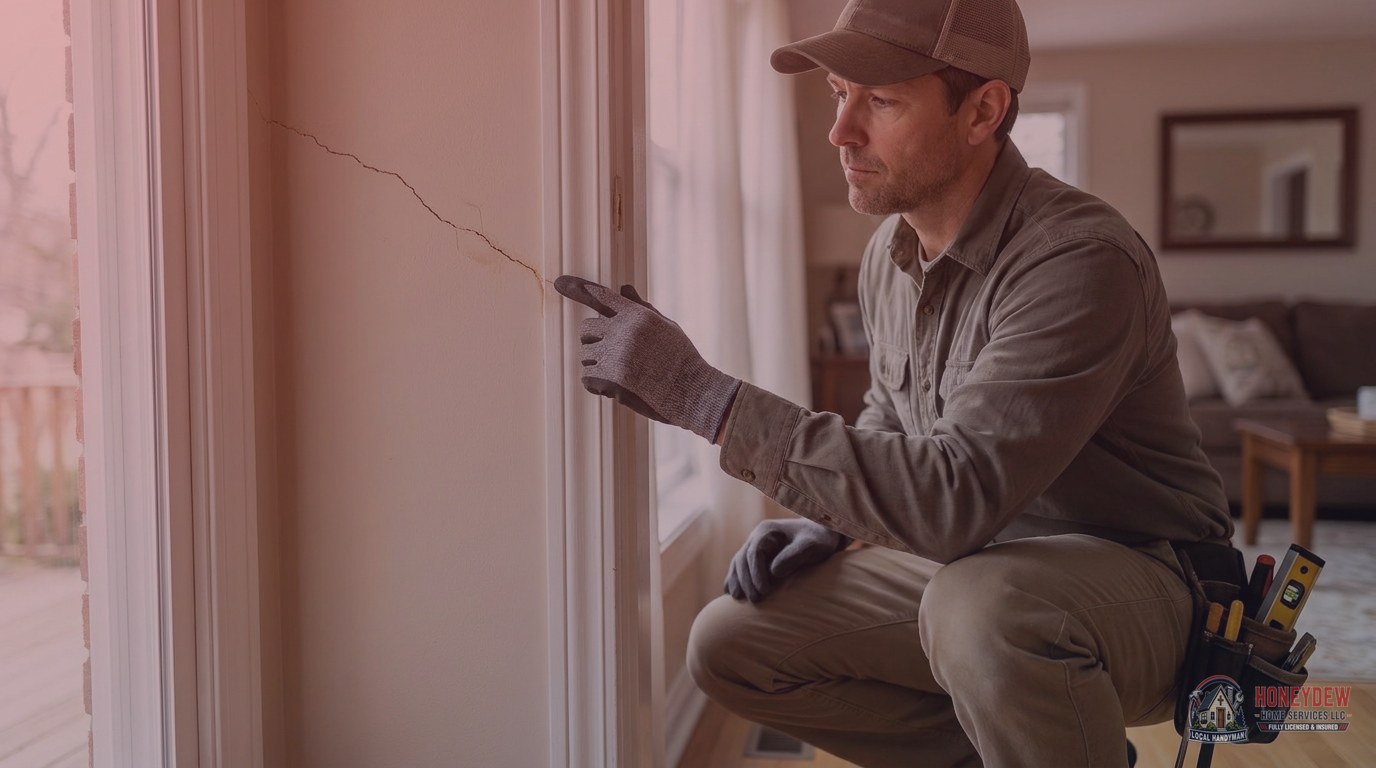
Direction tells the real story. A crack running at roughly 45 degrees from the corner of a door or window frame signals frame racking, where the opening shifts out of square as the foundation moves. Trotter Company, a Georgia foundation repair firm, lists diagonal drywall cracks alongside sticking doors and gaps around windows as early warning signs of repetitive foundation stress. Anglin’s Foundation & Masonry Repairs notes the same pattern appears seasonally, with doors and windows sticking in some seasons and not others.
A 45-degree corner crack is not normal settling, and treating one like a cosmetic blemish backfires twice. A cosmetic drywall patch over an active corner crack will re-crack within months, and every patch masks a structural problem that worsens with each wet and dry season cycle. The foundation keeps moving beneath the repair, so the homeowner pays to fix the same crack repeatedly while the underlying cause grows more expensive to correct.
Three features separate a harmless hairline from a crack that earns a structural evaluation: width, direction, and rate of growth. A benign hairline stays thin, follows a straight seam, and looks the same year after year, while a concerning crack widens past hairline width, runs diagonally from a corner, and lengthens or reopens as the seasons change. Hairline cracks along the ceiling-wall joint deserve a calmer read: these ceiling-joint hairlines are extremely common in Georgia homes, almost always trace back to seasonal truss movement, and look alarming while typically carrying no structural significance.
Diagonal corner cracks require a structural assessment before any cosmetic drywall repair is attempted. A foundation specialist or structural engineer can measure the movement, identify the cause, and confirm the home has stabilized, and only then can a handyman legitimately finish the repair with tape, compound, and texture that will actually hold.
Is a small water stain on drywall really a big deal if the leak is already fixed?
Yes. A repaired leak does not make the drywall safe. Drywall’s gypsum core absorbs moisture deep into the panel, and the paper facing is a food source for mold when persistently damp, even after the surface looks and feels completely dry.

Middle Georgia’s climate works against a damp wall. According to the Georgia HVAC Authority, Georgia’s humidity averages around 70% annually and often exceeds 80% on summer mornings, so moisture trapped in a wall cavity dries slowly. Mold colonizes the back of the panel long before any stain shows on the front. Mold also carries health implications that outlast the leak: spores from a hidden mold colony circulate through indoor air and trigger allergic reactions and respiratory irritation, and the risk falls hardest on children, older adults, and anyone with asthma or a weakened immune system.
A stain that has sat through one Middle Georgia summer has almost certainly fed a mold colony, and paint will not resolve the mold colony.
The dividing line between cosmetic and structural is firmness. A homeowner can usually seal a small stain on drywall that still feels solid with a stain-blocking primer and repaint the wall. Drywall that feels soft, crumbles at the touch, or shows spotting requires removal and replacement, because sealing over damaged drywall traps the mold colony inside the wall and adds to the snowballing damage from ignored repairs.
What does bubbling or peeling tape along a drywall seam mean?
Bubbling or peeling tape along a drywall seam means the tape bond has failed and the joint no longer holds the two panels together. Bubbling or peeling drywall tape precedes full seam separation and recurring visible cracks, and the fix requires new tape, not more filler.
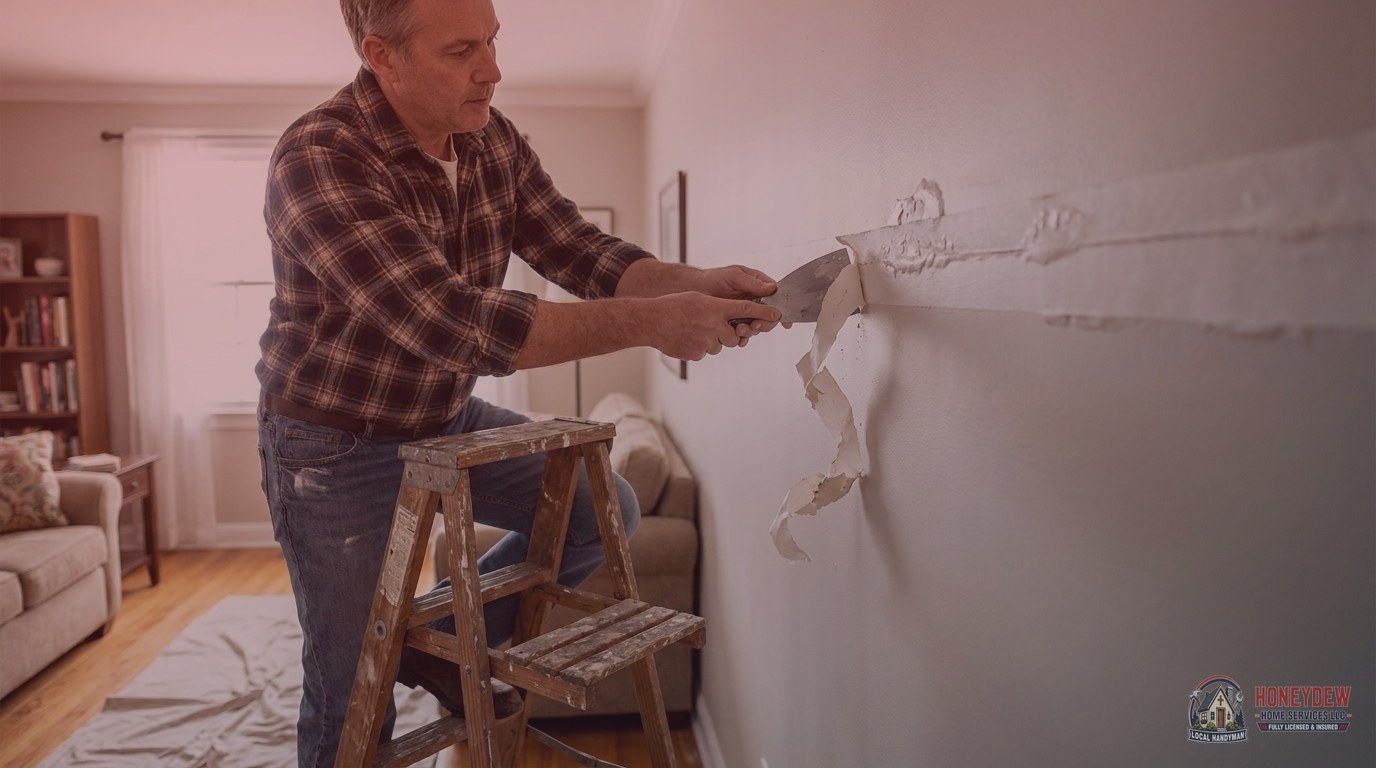
Drywall tape bridges the seam between two panels, and joint compound locks the tape in place. Once the tape loses adhesion, the joint has no structural continuity. Bubbling points to one of two culprits: moisture working into the wall, or poor original application where the installer used too little compound or trapped air under the tape. Both causes turn the seam into a hinge that cracks under any normal house movement.
Spackling over a failed tape seam is a temporary fix. The crack returns no matter how many times the seam is spackled over, because the root failure is the tape bond, not the filler. In Middle Georgia’s humidity, a spackled-over seam often re-cracks within weeks.
A lasting repair removes the failed tape completely. The installer embeds new tape in fresh joint compound and feathers the patch out over three coats, each coat wider than the last. The finished seam moves with the wall instead of against the wall.
Can a popcorn ceiling hide drywall damage I should be worried about?
Yes. Popcorn ceiling texture contains concealed water stains and stress cracks that stay invisible without removal, because the irregular bumpy surface absorbs and scatters light, masking the yellow-brown leak shadows and widening gypsum cracks that a smooth flat ceiling reveals immediately.
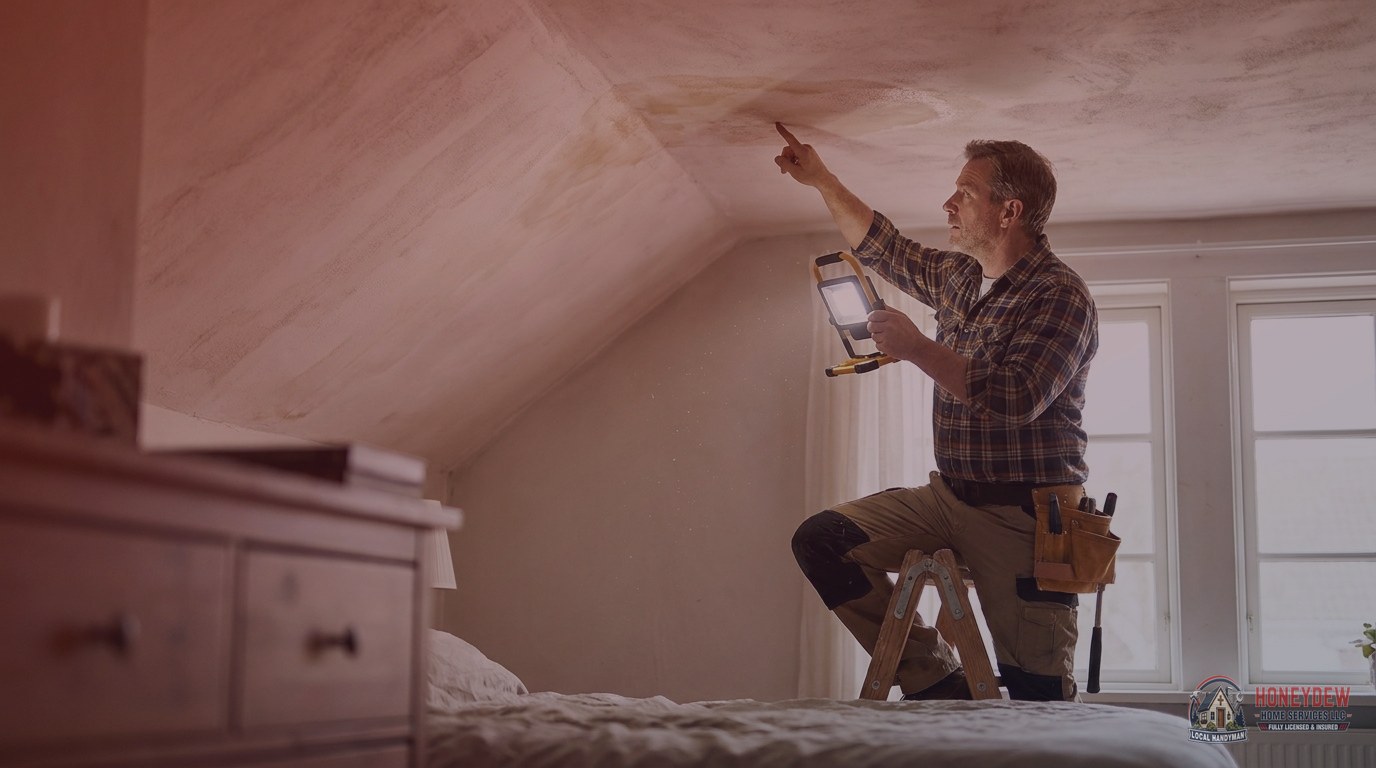
A slow roof leak or plumbing drip can stain the drywall above a room for months while the popcorn texture camouflages the discoloration. Stress cracks in the gypsum below the texture can widen and propagate for years without telegraphing through the thick texture layer, so both problems stay invisible until removal.
Georgia homes built before 1985 carry a second hazard, because popcorn texture applied in that era can contain asbestos. Scraping or cutting untested texture can release asbestos fibers into living spaces, so laboratory testing must come before any repair or removal. Ignoring a popcorn ceiling because the ceiling looks fine is the most expensive choice a homeowner makes.
The safe sequence is test, assess, repair, then re-texture: a lab confirms whether asbestos is present, a licensed contractor evaluates the drywall underneath, repairs address any damage found, and new texture or a smooth finish goes on last. A popcorn ceiling ranks among the common drywall problems homeowners overlook because the texture lets small warning signs grow into larger repairs.
Are nail pops just cosmetic, or is my drywall telling me something?
A nail pop is usually cosmetic, but a pattern of pops is the drywall reporting a real problem. One or two isolated pops are harmless surface flaws; a line or cluster of pops across a wall or ceiling signals ongoing wood movement or improper fastener spacing during original construction.
Wood stud shrinkage and seasonal humidity cycling in Georgia homes cause nail pops. Framing lumber shrinks as the wood dries after construction, and studs swell and contract as indoor moisture changes through the year. That movement pushes the fastener head through the drywall surface and leaves the familiar round bump.
Middle Georgia’s climate makes the cycle worse. Humid summers swell the framing, drier winters shrink the lumber back down, and the repeated expansion and contraction works fasteners loose year after year. Nail pops are common in local homes for exactly that reason.
The right repair fixes the fastener, not just the bump. The correct method drives a drywall screw above and below the pop, dimples each screw head just below the surface, and fills the dimples with joint compound, rather than just pushing the nail back and spackling over the spot. A pushed-back nail leaves the same loose fastener in place, and the pop returns. Middle Georgia homeowners use Kenny Neville handyman services to identify and repair all five neglected drywall problems, including nail pops that resurface after a spackle-only patch.
Ceiling pops deserve closer scrutiny than wall pops. Ceiling drywall bears its own weight, so fasteners failing across a wide overhead area can let the sheet sag, while a wall pop stays a small local flaw.