
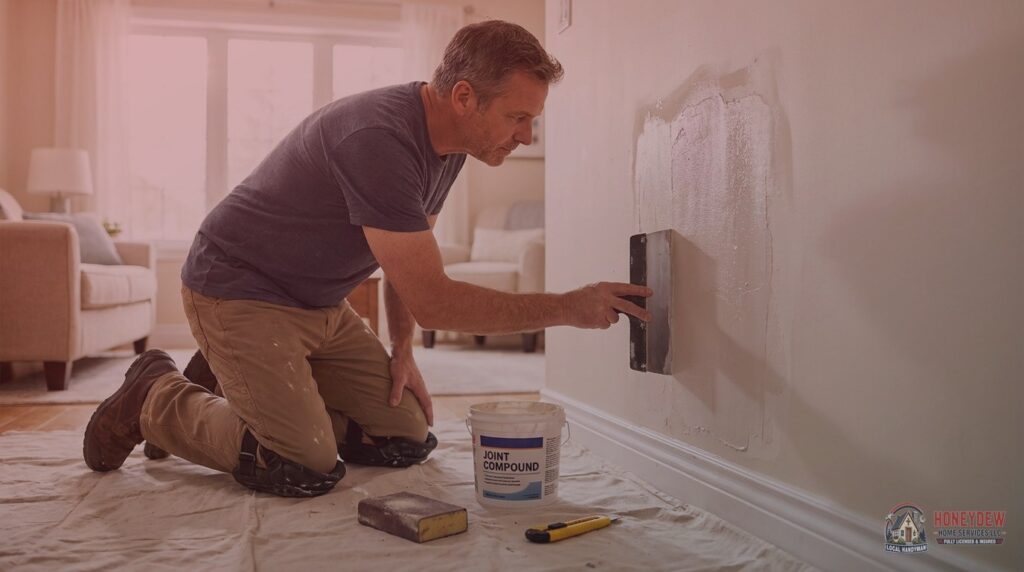
Kenny Neville provides licensed residential drywall repair and patching for Middle Georgia homeowners, covering hole patching, crack repair, and surface finishing. Kenny Neville restores walls damaged by doorknobs, water intrusion, settling, and DIY mishaps, and every repair requires skilled patching and precise texture matching to disappear completely. Kenny Neville finishes each repair so the patched area blends invisibly into the existing wall surface.
What drywall repair and patching services does Kenny Neville offer?
Kenny Neville provides licensed residential drywall repair and patching in Middle Georgia. His service covers hole patching, crack repair, water-damaged panel assessment and replacement, and texture-matched surface finishing for homeowners in McDonough and the surrounding communities.
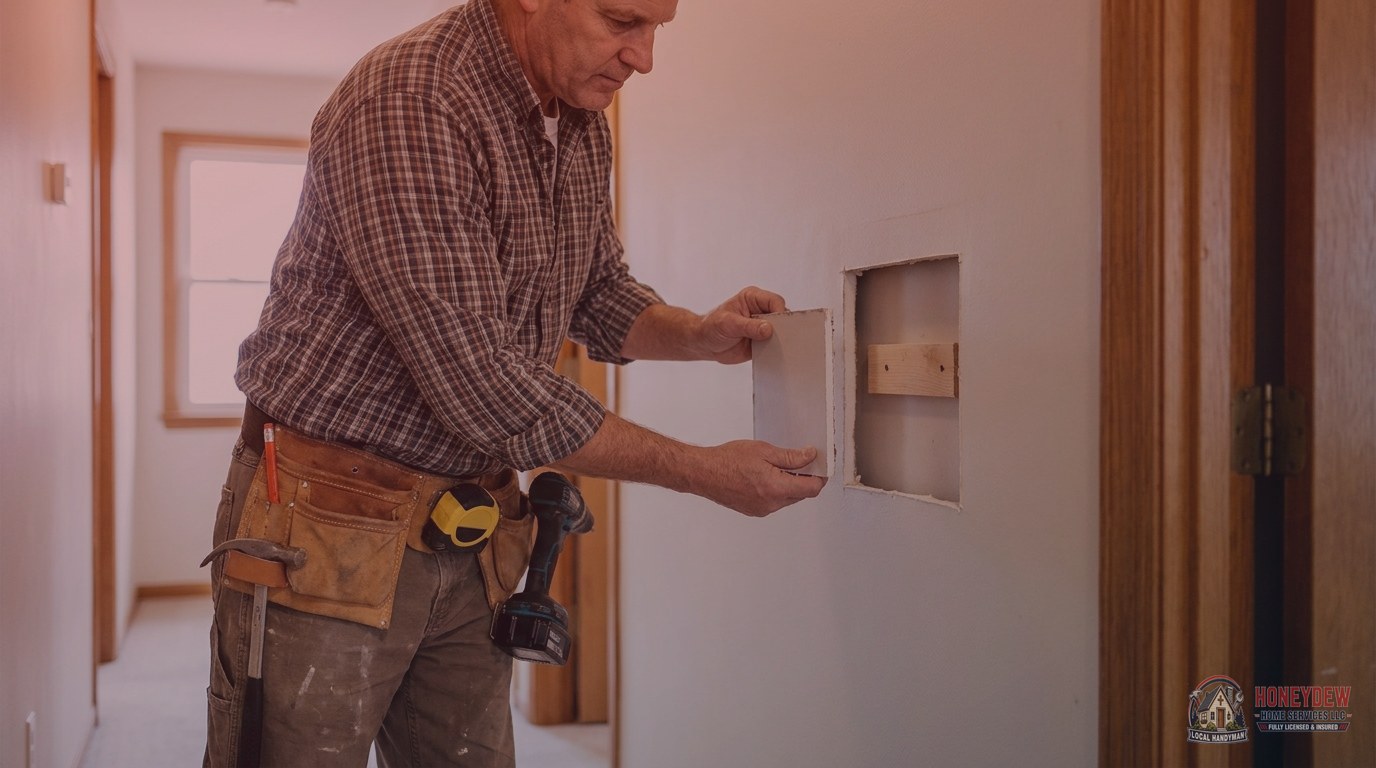
Hole patching is the most common residential drywall repair request. Kenny Neville patches doorknob-sized punctures, furniture-impact damage, and anchor pull-outs by cutting the damaged area back to solid gypsum, backing the opening, and filling it flush with the surrounding wall surface.
Crack repair covers hairline surface cracks, corner bead separation, and ceiling joint cracks. Kenny Neville identifies whether a crack comes from normal settling or from active structural movement before taping it, because a crack caused by ongoing movement reopens when the underlying cause goes unaddressed. Georgia’s humidity and clay-soil settling turn small cracks into larger repairs when ignored, a pattern the overlooked drywall issues in Georgia resource documents for local homeowners.
Water-damaged panels receive an assessment before any work begins. Kenny Neville checks the panel for softened gypsum, staining, and mold risk, then repairs the affected section or replaces the panel outright when moisture has compromised its structure. Water damage rarely stays small.
Every patch ends with surface finishing. Kenny Neville tapes, sands, and primes each repair, then matches the existing wall texture, from smooth finishes to orange peel and knockdown, so the patched area blends into the rest of the wall.
Drywall repair and patching is one line on the full residential repair menu, the complete list of home repair services Kenny Neville provides as a licensed residential contractor based in McDonough and serving Middle Georgia. A licensed contractor protects the homeowner when a patch opens a wall cavity that hides wiring or plumbing.
Homeowners unsure whether their damage needs a professional or a careful weekend fix can weigh both paths in the professional versus DIY drywall repair decision guide, which matches common damage types to the right level of repair.
How does Kenny Neville patch a drywall hole?
Kenny Neville patches a drywall hole by sizing the damage, setting a mesh patch or backing board for support, applying joint compound in multiple coats with full drying time between each, and sanding the surface flush before matching the wall texture. Drywall hole patching requires backing support, joint compound application, sanding, and texture matching to be invisible.
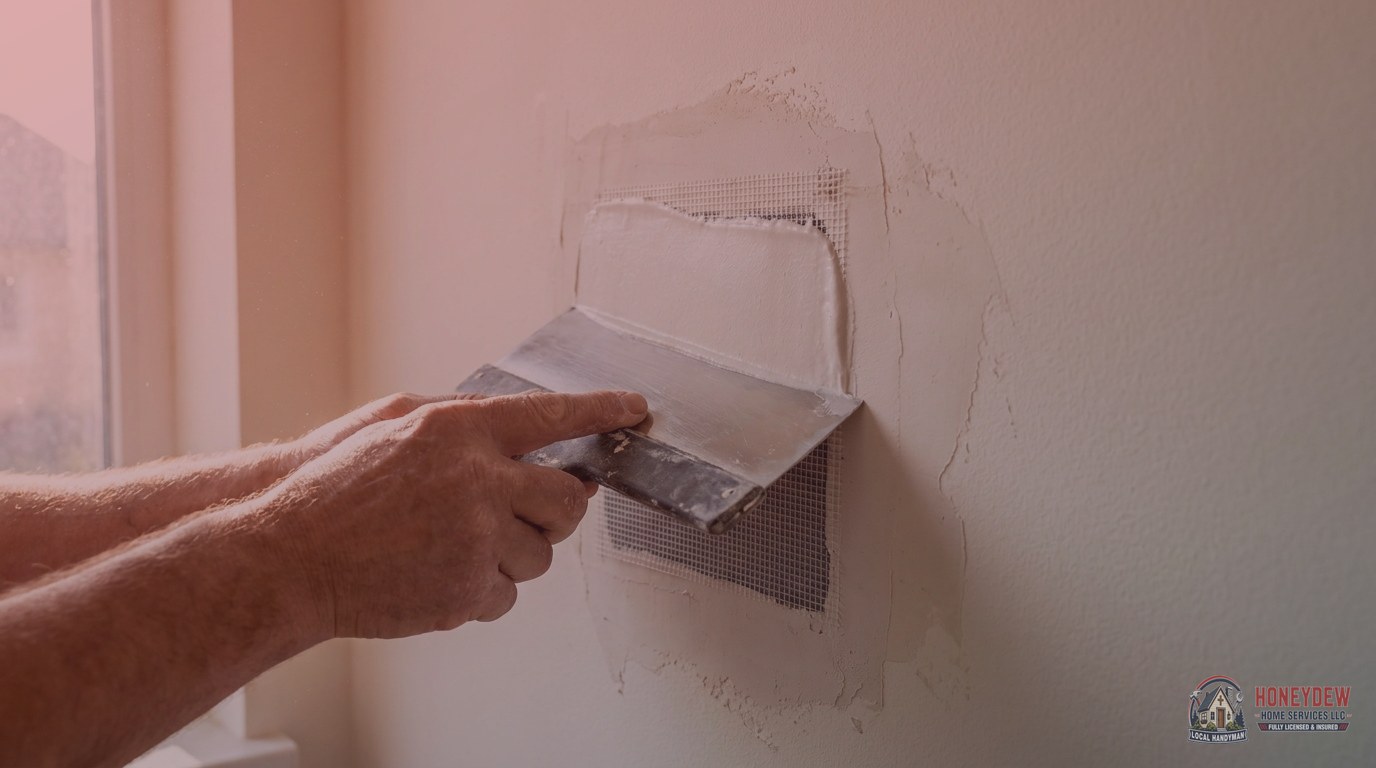
Small holes under six inches take a self-adhesive mesh patch covered with joint compound, and the repair needs no backing behind the wallboard. Bigger openings need a firm substrate, so Kenny Neville sets a backing board behind the drywall or cuts a California patch, an oversized drywall plug whose paper edges bond straight to the wall face. Both the backing board and the California patch provide the firm substrate that makes the finished patch invisible.
Each coat of joint compound dries fully before the next coat goes on, and the repeated coats build the patch level with the surrounding wall. Kenny Neville sands the dried compound to a feathered, flush surface before applying texture, so the finished patch disappears and the wall looks like nothing ever happened.
The drywall hole patching in McDonough, GA covers local scheduling and service details for homeowners in that community.
Can Kenny Neville repair water-damaged or cracked drywall?
Yes. Kenny Neville repairs both, but the right fix depends on the cause. Water-damaged drywall must be assessed for an active moisture source before patching begins, and ceiling cracks may indicate structural settlement or truss movement, requiring diagnosis before cosmetic repair.
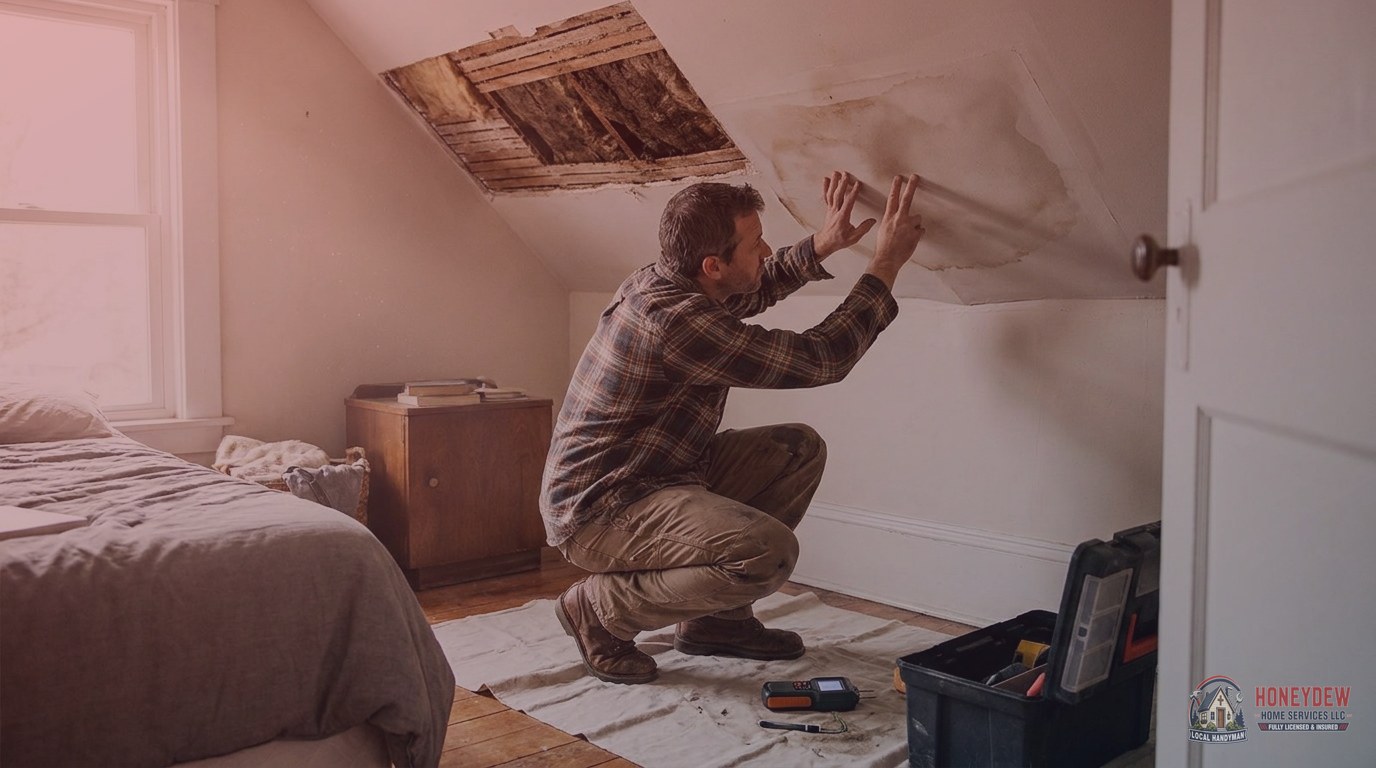
Kenny Neville confirms the leak or intrusion source is resolved before any water damage repair starts, because patching over active or residual moisture traps mold behind the new surface and creates a more expensive problem than the original stain. When panels turn soft, crumbly, or mold-compromised, Kenny Neville removes the damaged panels and installs a full section replacement, never a surface patch. Repairing water-damaged drywall follows a sequence of drying verification, panel cut-out, and refinishing, and the Water-Damaged Drywall Repair: Steps and Cost Guide details each step of that sequence. Homeowners dealing with wider moisture fallout can also learn what salvaging trim after flooding involves and why stopping wood rot in Georgia depends on humidity control.
Ceiling cracks split into two groups: cosmetic settlement cracks and stress cracks that signal movement and need diagnosis first. Ceiling Crack Repair: What’s Causing It and How It’s Fixed explains why ceiling cracks form and helps a homeowner separate the two groups before any compound touches the wall. Middle Georgia’s humid climate causes seasonal wood-framing movement that produces recurring hairline cracks at corners and ceiling joints. Those cracks are cosmetic, not structural, but the cracks return when patched with standard joint compound, because standard compound dries brittle and cannot flex as the framing shifts. Mesh tape plus setting-type compound prevents the recurrence: setting-type compound cures through a chemical hardening reaction rather than simple air-drying, and the harder cure locks the tape to both panel faces so the finished joint rides the seasonal framing movement as one solid unit instead of fracturing along the seam.
Why is drywall texture matching so difficult to get right?
Drywall texture matching is difficult because every Middle Georgia wall carries its own version of orange peel, knockdown, skip trowel, or smooth finish, and aged texture holds a settled color and sheen that fresh compound cannot duplicate without practiced technique.
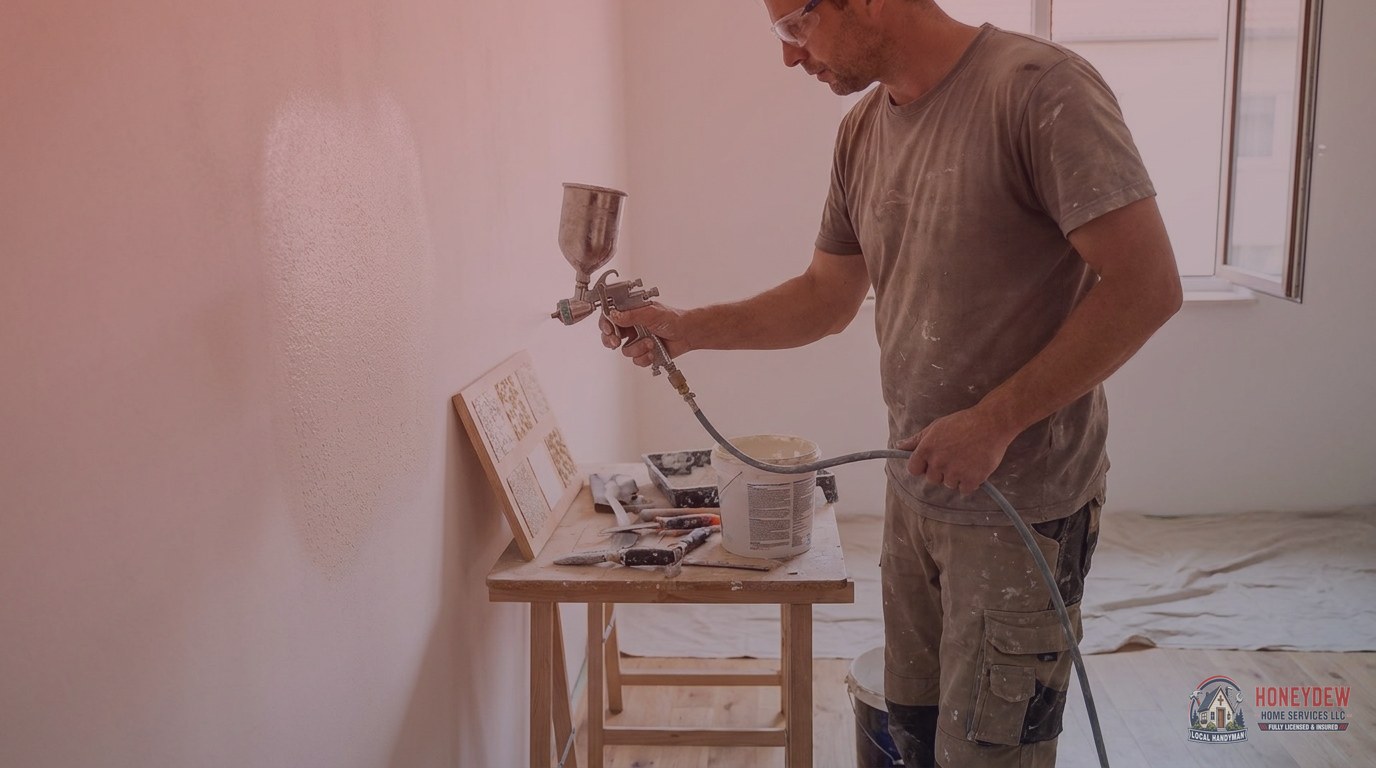
Years of sunlight and repainting shift a wall’s color, and the original texture dulls along with the paint. Fresh compound and fresh paint reflect light differently than the surrounding surface, so even a perfect pattern copy can read as a brighter or flatter spot. The sheen gives the patch away.
The textured drywall matching challenges behind Middle Georgia wall finishes come down to equipment and repetition. Finishers spray orange peel and knockdown through a hopper gun, and the gun’s air pressure, nozzle size, and compound consistency all change the final pattern. A skip trowel finish comes from hand work with a curved trowel, so copying a skip trowel surface demands the same wrist motion and pressure the original finisher used. Textured Drywall Matching: Why It’s Harder Than It Looks covers the blending process for each pattern.
Popcorn ceilings are a special case. Acoustic ceiling material installed before 1980 can contain asbestos, so a homeowner should have the material tested before sanding or scraping disturbs the surface.
Texture matching is the most skill-dependent step in drywall repair, and a mismatch is the reason DIY patches remain visible. A flush, sanded patch with the wrong texture still catches raking light from a window or lamp, and the repair shows up as a blemish on an otherwise flat wall.
How much does drywall repair cost with Kenny Neville?
Drywall repair cost with Kenny Neville is determined by hole size, number of repairs, texture complexity, and whether priming and painting is included. Kenny Neville quotes each job individually, so Middle Georgia homeowners receive a price built around their actual walls rather than a published rate.
Every quote follows the same four factors:
1. Hole size and count. Small nail holes and a single doorknob puncture patch quickly, while larger openings need backing support and multiple compound coats, which adds labor time. 2. Texture complexity. Smooth walls finish faster. Matching knockdown, orange peel, or another existing texture takes extra passes to blend the patch into the surrounding wall. 3. Priming and painting. Kenny Neville scopes priming and painting separately from the patch itself, and the quote states clearly whether a paint-ready finish is included in the price. 4. Travel within Middle Georgia. Distance across the Middle Georgia service area factors into the quote, since drive time is part of the job’s real cost.
Bundling several patches into one visit lowers the per-repair cost, because setup, travel, and cleanup happen once instead of three or four times. Material savings from self-patching often disappear into texture-matching rework, a cost worth weighing in any professional drywall repair vs. DIY decision.
Call or contact Kenny Neville with a description of the damage, and you will get a straightforward quote for your specific repair.