
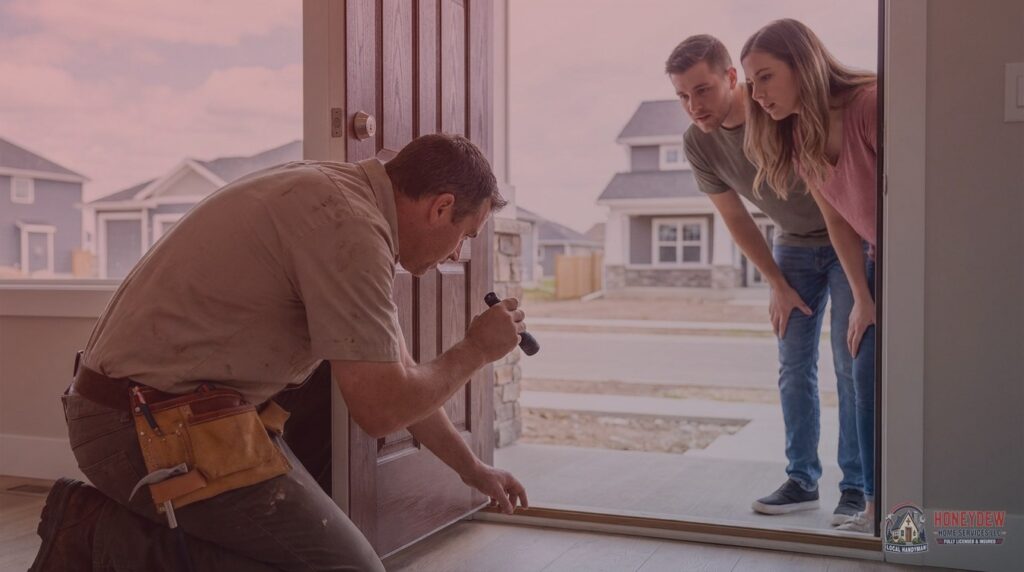
New homeowners in Locust Grove, GA routinely find maintenance problems their home inspection never flagged. Locust Grove’s rapid growth in Henry County draws first-time buyers from Atlanta, and most first-time buyers lack the experience to spot small issues before those issues grow. Kenny Neville’s licensed residential handyman service exists to fix those overlooked repairs, often in a single visit.
Why do new homeowners in Locust Grove, GA always find repairs after move-in?
New homeowners in Locust Grove find repairs after move-in because a home inspection is a pass/fail safety assessment, not a maintenance punch list. Cosmetic defects, minor functional issues, and deferred maintenance fall outside inspection scope and transfer to the buyer at closing.

A standard home inspection evaluates the roof, structure, electrical, plumbing, and HVAC for safety and major-system function. Home inspections exclude cosmetic defects, minor functional issues, and deferred maintenance items that surface within the first year of ownership. InterNACHI defines a home inspection as visual-only: wall, ceiling, or floor coverings conceal components and defects from the inspector, so anything behind the coverings and any area the inspector cannot reach sit outside the report. Yahoo Finance notes that furniture, boxes, rugs, and stored belongings in an occupied home can cover walls, floors, and closets an inspector would otherwise examine, creating blind spots even a thorough inspector cannot close.
Negotiation reinforces the transfer. Sellers and builders are not required to fix items below inspection-report thresholds, so those items transfer to the buyer. A sticking door, a dripping faucet, or cracked caulk around a tub rarely earns a place in a repair amendment beside a failed GFCI outlet or an aging water heater. The buyer inherits the small stuff.
Atlanta-area migration drives Locust Grove’s rapid growth, and the influx brings a high proportion of first-time homeowners unfamiliar with routine residential maintenance. FOX 5 Atlanta reports residents spotting California, Texas, and Florida license plates around town, and Atlanta-area buyers seek Locust Grove because of proximity to Atlanta and competitive home prices. Many of these buyers arrive from apartments or family homes where a landlord or parent handled the upkeep. Nobody hands a new owner a manual, so early warning signs go unread.
Timing compounds the surprise. The first 90 days of ownership consistently surface the most overlooked issues, regardless of home age or inspection quality. Daily routines stress-test a house in ways a walkthrough cannot: back-to-back showers expose a slow drain, the first cold snap exposes a weak furnace, and the first hard rain exposes grading problems around the foundation. A brand-new build is not exempt. New homes settle, and settlement reveals its own list.
What specific repairs do new Locust Grove homeowners most commonly miss?
New Locust Grove homeowners most commonly miss drywall nail pops, hairline settling cracks, failed caulk, sticky interior doors, worn weather stripping, and deteriorating grout. A local licensed handyman repairs all six defects during a single first-year visit to the home.
New construction homes in Locust Grove exhibit settling-related defects such as drywall nail pops and caulk gaps within the first 12 months. Georgia’s humid climate dries framing lumber while fresh concrete settles, and that movement produces nail pops, hairline cracks, and caulk separation even in a brand-new build. Many buyers assume a new home needs no immediate repairs, and that assumption costs them later.
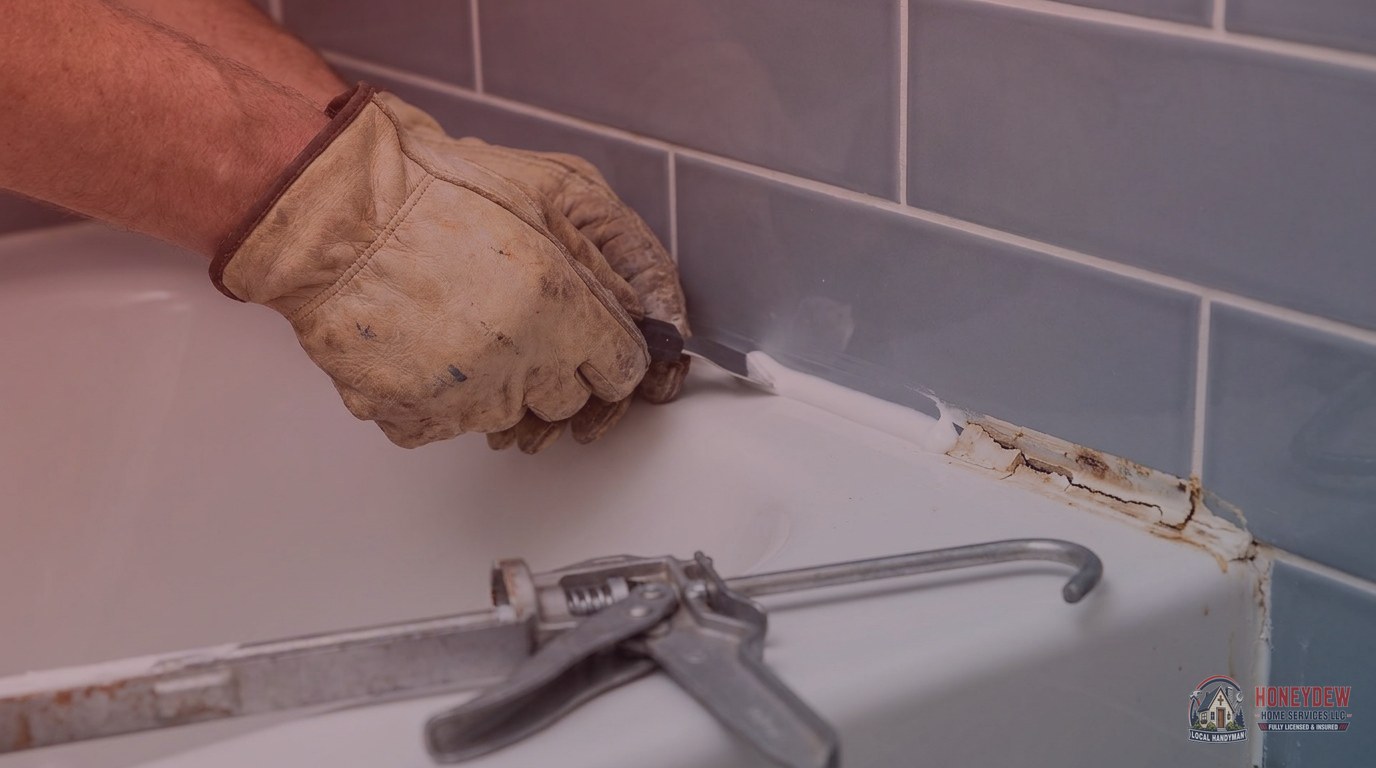
Failed or missing caulk around tubs, showers, windows, and exterior doors is a direct path to water intrusion. According to iBuyer.com (2026), slow leaks behind shower walls cause Class 3 water damage that goes undetected for months, and mold begins growing within 24 to 48 hours of water exposure. Flume Water (2024) names replacing deteriorating caulk and grout as a key preventive maintenance action. First-time DIY caulk jobs fail at a high rate. A new bead applied over old material instead of a fully stripped joint peels within months.
Frame settling also leaves interior doors sticky or misaligned, and loose or missing weather stripping on exterior doors reduces energy efficiency. Grout deterioration in tile floors and shower surrounds slips through most pre-purchase walkthroughs. DSDT.edu (2026) notes that home inspectors focus on structural and functional aspects rather than aesthetic imperfections, so minor cosmetic flaws never get flagged.
Which overlooked issues become expensive if a new homeowner waits too long to fix them?
The costliest overlooked issues are unsealed caulk around tubs and showers, non-functional GFCI outlets, and separated exterior trim. Water intrusion, mold, shock hazards, and pest-driven rot each escalate from an inexpensive handyman visit into four- and five-figure repairs.
Unsealed caulk gaps around tubs and showers let water pass behind tile and into wall cavities. Flume Water reported in 2024 that the Insurance Information Institute estimated the average water damage and freezing claim at $12,514. Mold multiplies that cost. InspectandTest.net reported in 2026 that professional mold remediation typically costs $1,500 to $6,000 for a contained area, with severe structural cases climbing past $10,000 to $30,000, and This Old House notes that mold in porous drywall or insulation requires full removal and replacement rather than cleaning. Deferred handyman repairs precede costlier damage such as water intrusion from unsealed caulk or mold from unaddressed bathroom grout failure. A handyman re-caulks a tub surround in one visit.
GFCI outlets in new Locust Grove homes are commonly non-functional at move-in, often because a tripped upstream device went unnoticed during the final walkthrough. Georgia residential building code requires GFCI outlets for kitchens, bathrooms, garages, and exterior outlets, so a dead GFCI outlet removes shock protection exactly where water and electricity meet. Replacing a GFCI outlet sits within a licensed handyman’s scope in Georgia, while panel work and new circuit runs require a licensed electrician. First-time homeowners often misjudge that line, paying electrician rates for a $15 outlet swap or ignoring a real safety defect.
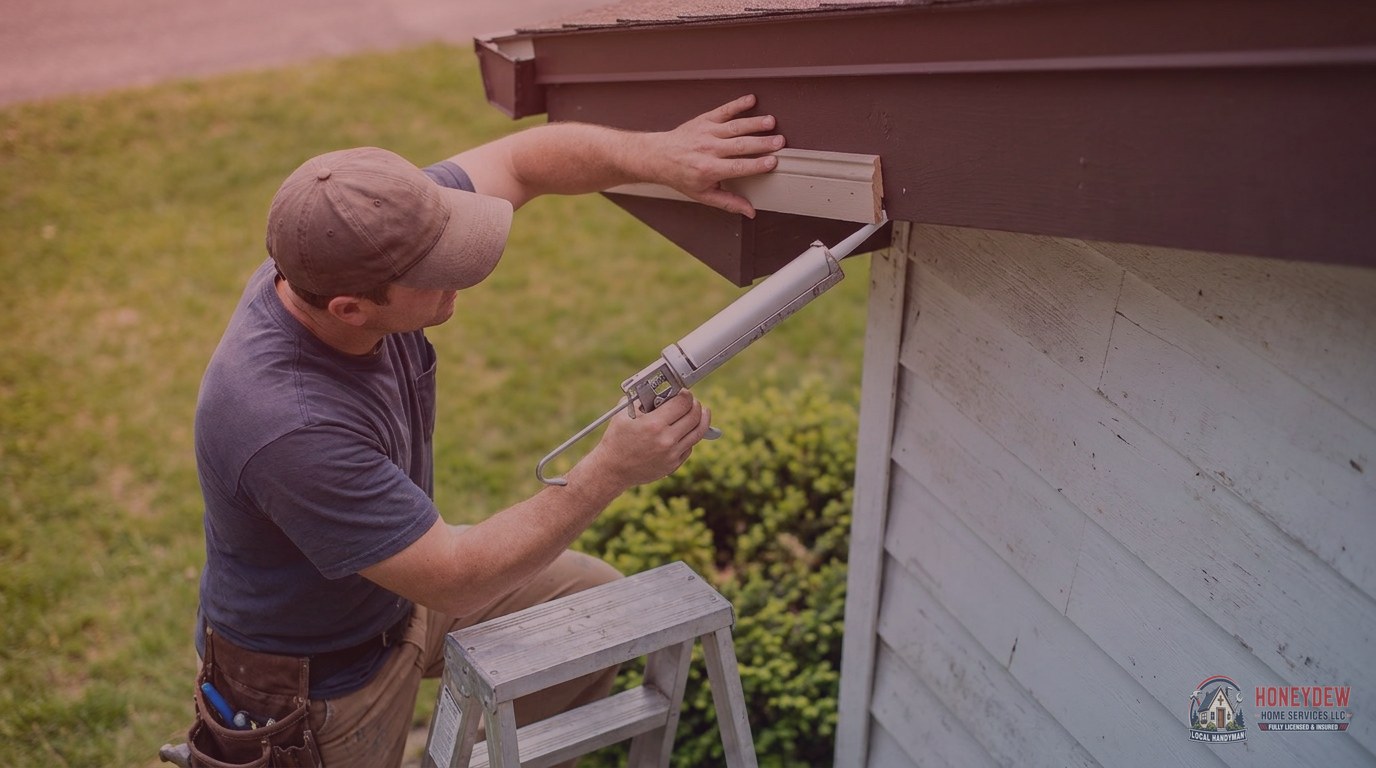
Georgia’s warm, wet climate punishes ignored exterior trim gaps and fascia separation. Open joints invite termites, carpenter ants, and moisture into the roof edge, and wood rot follows. A handyman reseals trim and reattaches fascia in a single afternoon. A licensed handyman checks caulk joints, GFCI testing, and exterior trim as part of the critical systems to inspect within 90 days, alongside plumbing and electrical checks.
How does Kenny Neville help new Locust Grove homeowners tackle these repairs?
Kenny Neville provides licensed residential handyman service that resolves multiple first-year repair items in a single visit, completing caulk, drywall, door adjustments, and minor electrical work such as GFCI outlet replacement for new Locust Grove homeowners during one scheduled appointment.
Kenny Neville works as a licensed residential handyman and consolidates the full first-year repair list under one provider instead of a plumber, an electrician, and a drywall contractor.
Kenny Neville bundles the first-year repair list under a single trip charge, so one appointment covers caulk, drywall patches, door adjustments, and minor electrical work without separate specialist call-out fees. Separate specialist calls charge travel and minimum-hour fees on every visit.
Kenny Neville, the trusted handyman for new Locust Grove residents, serves Locust Grove, the broader Henry County area, and Middle Georgia, and brings working knowledge of the construction patterns common in fast-growth subdivisions.
Sources
- DSDT.edu, “What is NOT Inspected During a Home Inspection?” (2026)
- FOX 5 Atlanta, “South Metro Atlanta continues to see population growth” (2026)
- Flume Water, “Water Damage Costs: Restoration vs. Prevention” (2024)
- InspectandTest.net, “Cost of Mold Remediation: A 2026 Price Guide” (2026)
- iBuyer.com, “Water Damage House Repair Costs in 2026” (2026)
- This Old House, “How Much Does Mold Remediation Cost? (2026 Guide)” (2026)