
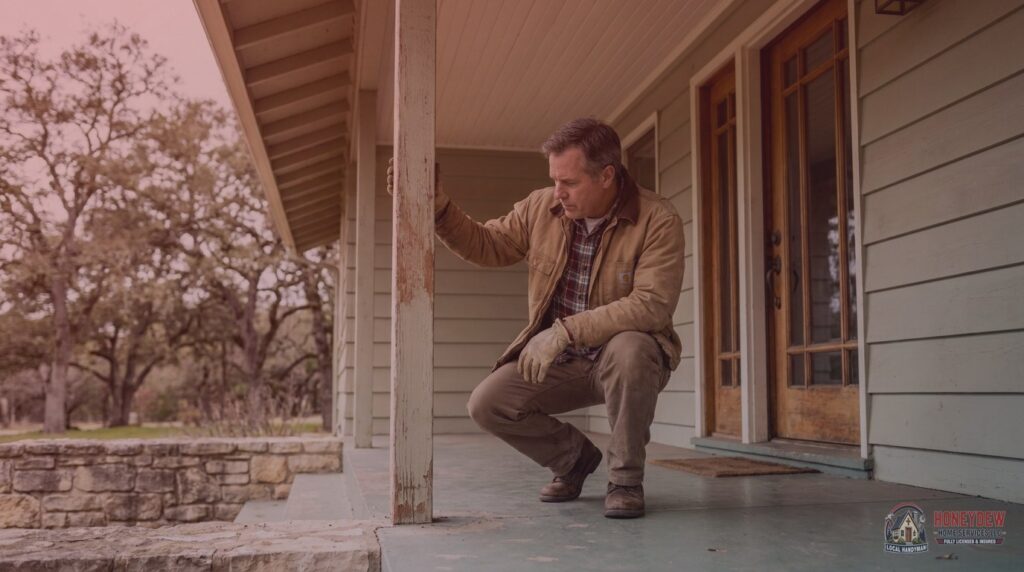
Griffin’s older homes, many built in the mid-20th century or earlier, develop predictable repair problems that general-purpose contractors often overlook. Kenny Neville’s licensed handyman service has diagnosed and fixed these recurring issues in houses across Spalding County for years. Older Griffin homes most often need exterior wood and siding repairs, interior surface and door fixes, and updates to aging plumbing fixtures.
Why do older homes in Griffin, GA need repairs more often?
Older homes in Griffin, GA need repairs more often because most date from 1940 to 1975, an era of wood framing, single-pane glass, and galvanized pipe that ages predictably, and because Georgia humidity, heat cycles, and decades of deferred maintenance accelerate that wear.
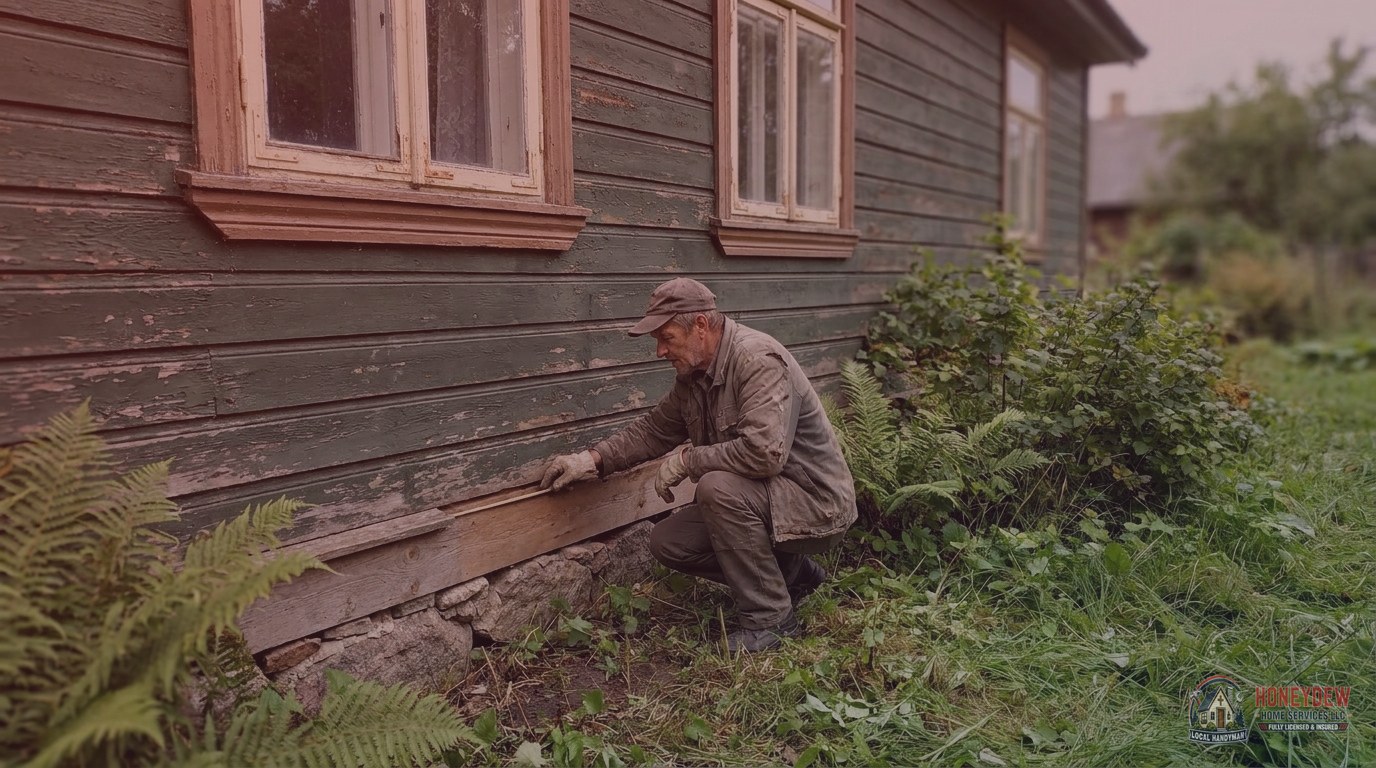
Griffin’s housing stock concentrates heavily in that mid-century band. According to a 2026 Homes.com overview, many of Griffin’s homes were built between the 1940s and the 1980s, and buyers are now restoring homes 60 to 70 years old across Spalding County. Nationally, the median age of owner-occupied homes reached 42 years in 2024, the oldest on record, according to a 2026 National Law Review analysis of Census Bureau data. Because houses from the same decades share the same materials, Griffin, GA older homes have a predictable pattern of recurring repair needs tied to construction era.
Mid-century materials wear out on a shared schedule. Wood framing dries, shrinks, and shifts. Single-pane window glazing hardens and cracks, and galvanized steel pipe corrodes from the inside until water pressure drops. Roof decking, window glazing, and porch framing on a 1940 to 1975 Griffin home all reach end-of-life within the same decade. That overlap carries a practical warning for the homeowner: fixing one aging system means the adjacent systems will follow within two to five years, so planning the next repair alongside the current one protects the budget.
Deferred maintenance applies to Griffin homes built between 1940 and 1980 at disproportionately high rates, largely because many Griffin homes from that era have changed hands multiple times and each new owner inherits what earlier owners postponed. The U.S. Census Bureau reported in 2023 that new owners of older homes spent a median of 1.5% of the home’s value on improvements and maintenance, compared to 0.6% for longtime owners. According to The MortgagePoint in 2026, deferred repairs accumulate over time and can escalate into emergencies that jeopardize a household’s financial security.
Georgia’s climate speeds everything up. Humidity swells wood framing and feeds rot in porch posts and roof decking, summer heat bakes glazing putty and stresses attic structures, and the cycle repeats dozens of times each year. A mid-century house in Griffin simply weathers faster than an identical house in a dry region.
Older-home repairs also differ in kind from newer construction problems. According to a 2026 National Law Review analysis, replacements accounted for roughly half of all remodeling spending on homes built before 1940. Construction Coverage found in 2026 that pre-1940 homes are nearly 30 times more likely to be in inadequate condition and cost nearly 10 times more in routine maintenance than homes built after 2022. Newer homes need punch-list adjustments. Older Griffin homes need full systems replaced at end-of-life.
What is the most common exterior repair on older Griffin homes?
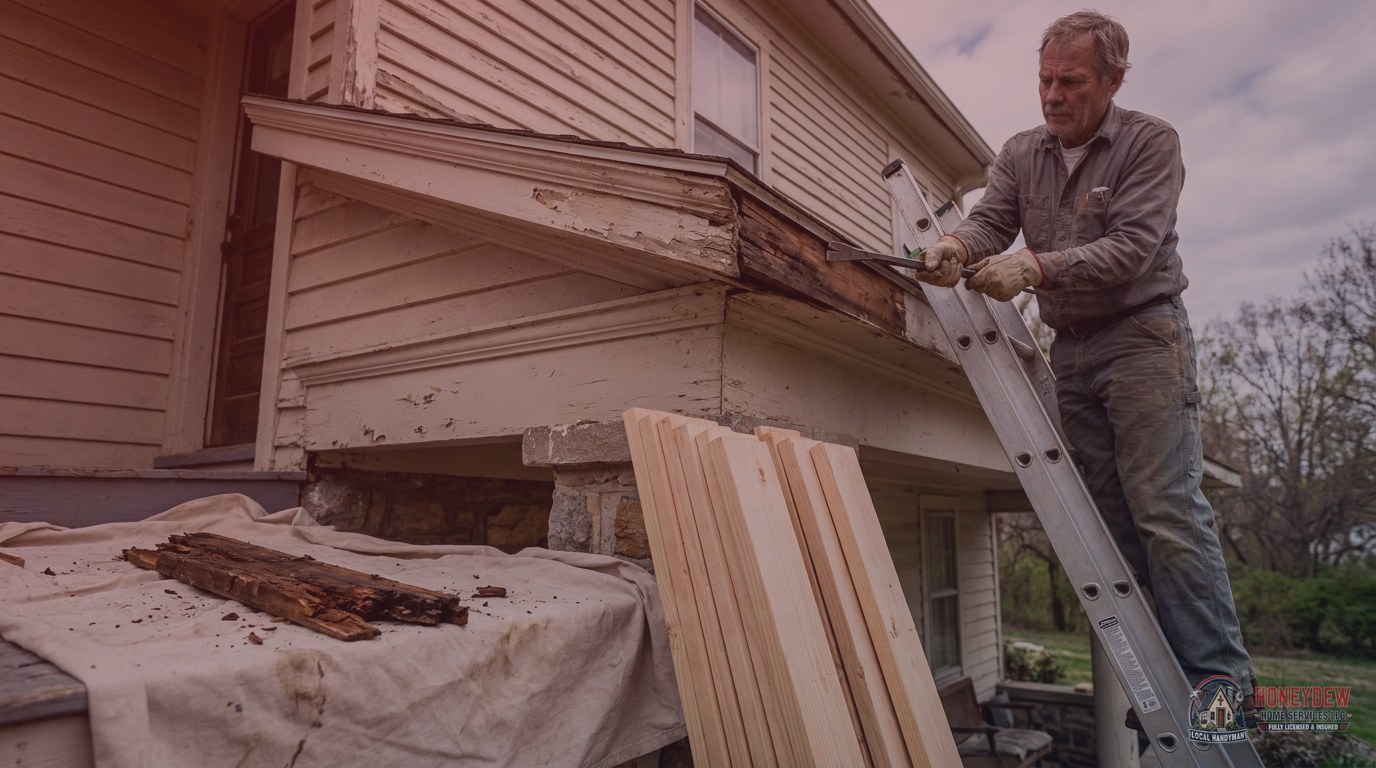
Wood rot is the most frequently cited repair in Griffin’s older wood-framed housing stock. Decay appears first on fascia boards, window sills, porch posts, and exterior door frames, because Georgia humidity keeps exposed exterior wood damp through long warm seasons.
Each location fails in its own way:
- Fascia boards rot behind leaking or overflowing gutters, which soak the board’s end grain.
- Window sills hold rainwater on a flat surface, so the sill nose and corners soften first.
- Porch posts wick moisture upward from concrete piers and porch floors into the post base.
- Exterior door frames decay at the bottom corners where the threshold meets the jamb.
Griffin’s humid subtropical climate keeps wood moisture elevated for much of the year, and decay fungi colonize any wood that stays damp. Homes past 40 years carry original caulk, glazing, and paint films that have failed somewhere, which makes the wood rot common in older Georgia homes a near-universal finding during inspection.
Depth decides the fix. A handyman treats shallow, localized decay with epoxy consolidant and filler, a spot-repair that is structurally sound on non-load-bearing trim such as sills, fascia, and door jambs. Full board replacement becomes appropriate when decay runs the length of a board or reaches a load-bearing member such as a porch post carrying a roof. Rot is frequently misquoted as a full-replacement job, so a homeowner who asks which boards actually need swapping avoids paying for replacement that sound trim does not require.
Porch and deck boards on older Griffin homes often need individual plank replacement rather than a full deck rebuild. Homeowners sometimes over-scope this work into a full contractor project, although replacing isolated soft planks sits well within handyman scope.
What interior repairs come up most in Griffin’s older houses?
The most common interior repairs in Griffin’s older houses are drafty or stuck single-hung windows, doors that bind or fail to latch after foundation settling, cracks in horsehair plaster or early drywall, and popcorn ceilings that need patching and texture matching.
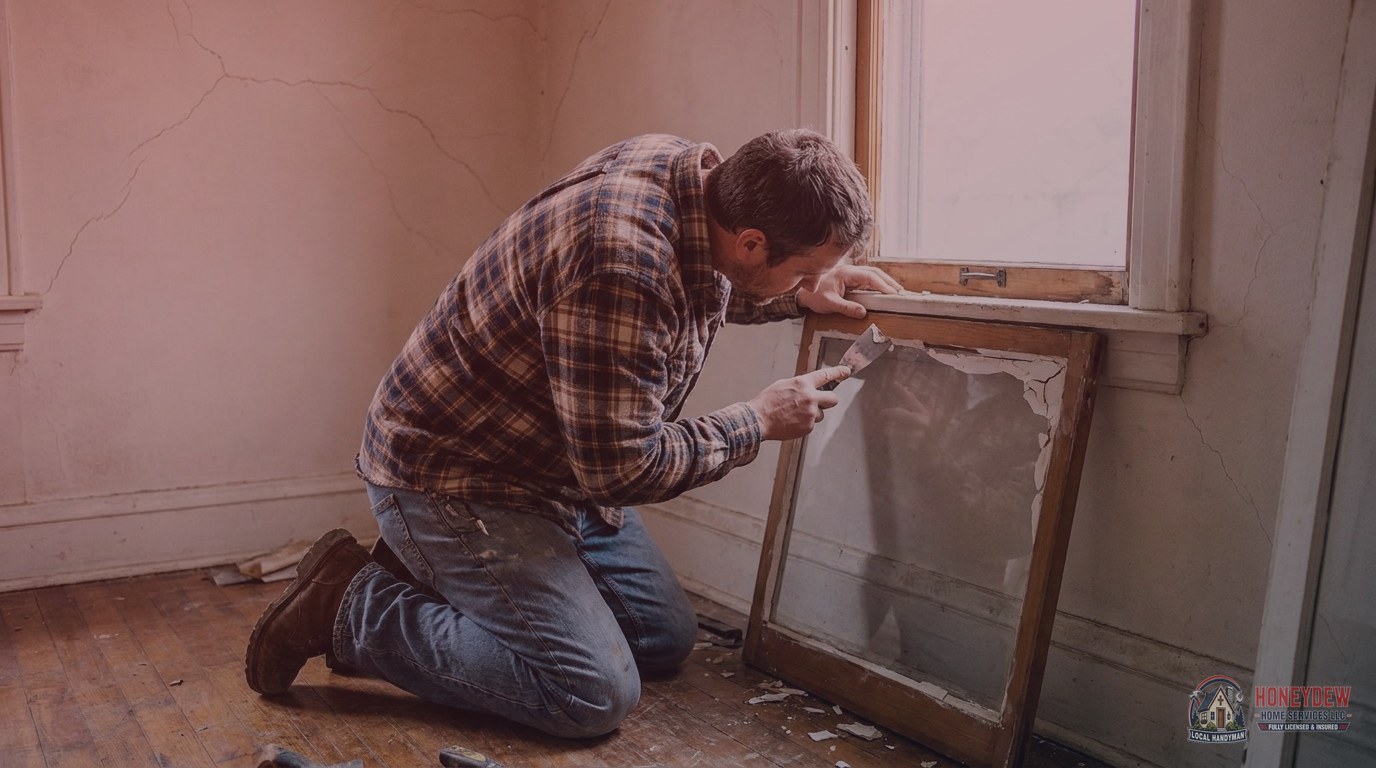
Single-hung windows give older Griffin homes steady trouble. Frame shifting and seal degradation, both common in houses built before 1980, cause most older window and door failures. Glazing compound dries out and falls away from the glass, sashes swell and stick, and air leaks follow. A handyman repairs a drafty or stuck single-hung window short of full replacement: re-puttying the glazing compound, planing the sash so the single-hung window slides again, and fitting new weatherstripping.
Foundation settling racks door frames out of square in Griffin’s older houses, and interior doors then bind against the jamb or stop latching altogether. A handyman restores the fit without replacing anything: re-hanging the door, planing the edge, or resetting the strike plate.
Griffin houses with horsehair plaster or early drywall develop cracks at stress points: corners above doors and windows, ceiling joints, and stairway walls. A lasting patch keys new compound into the crack and accommodates the structural movement behind the damage, so the repaired line does not reappear next season.
Popcorn ceiling repair in pre-1980 Griffin homes addresses water damage, failed tape joints, and texture broken by old repairs. A handyman restores a damaged popcorn ceiling through two distinct deliverables: patching, scraping the damaged area and rebuilding the substrate, and texture matching, spraying fresh texture matched to the surrounding pattern. One firm boundary applies. According to InspectandTest.net (2026), the EPA banned spray-applied asbestos materials in 1973, yet asbestos stayed in popcorn ceiling formulations through about 1980, so a pre-1980 ceiling counts as a presumptive asbestos-containing material under NESHAP until laboratory testing says otherwise. Testing comes before any scraping or sanding.
What plumbing and fixture repairs are typical in older Griffin homes?
Galvanized supply line corrosion, toilet and faucet fixture repairs, and pipe leak fixes are the most typical plumbing jobs in older Griffin homes. Most of this work stays within handyman scope, while whole-house repipes and gas line work require a licensed plumber.
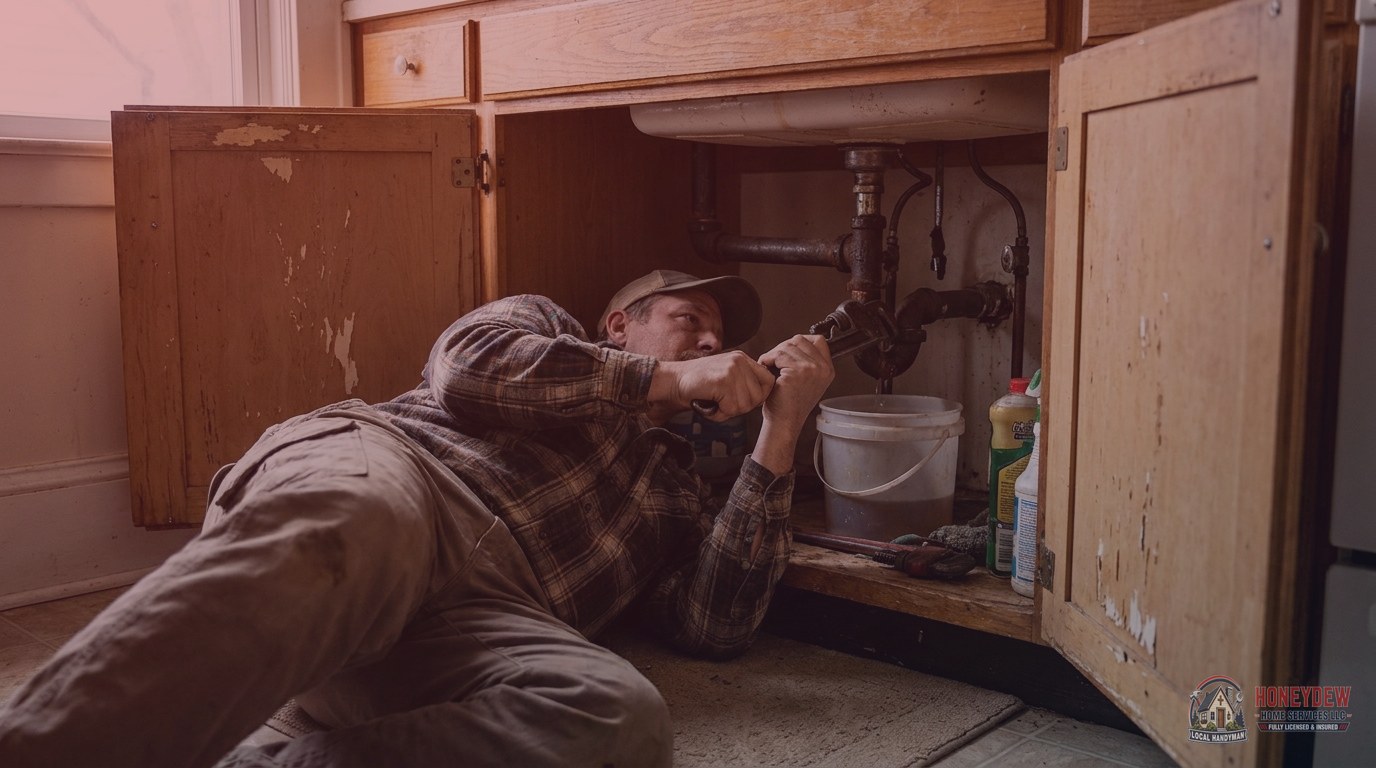
Many Griffin homes built before 1970 still run original galvanized steel supply lines. Square One Insurance (2025) reports that builders commonly installed galvanized steel pipes in homes before 1950 and in some homes until the 1960s, and all of those pipes have now exceeded their expected lifespan. According to Professional Engineering Inspections, Inc. (2024), galvanized pipe corrodes from the inside out, and corrosion scaling narrows the pipe’s cross-sectional area, which drops water pressure and discolors water at the tap. In these houses, aging galvanized plumbing fixtures precede visible corrosion and fixture failure requiring handyman-level repair: replacing supply line sections, swapping shut-off valves, and resetting fixtures.
Toilet and faucet repairs come up frequently because older Griffin homes use non-standard fitting sizes that off-the-shelf replacement parts rarely match. An experienced handyman identifies these older fittings and sources compatible replacements without cracking porcelain or straining aging supply connections.
The scope line matters here. A handyman handles fixture swaps, faucet and toilet rebuilds, shut-off valve replacement, and localized supply line repairs. A licensed plumber takes over for whole-house repipes and all gas line work. That referral carries extra weight with galvanized systems, because Square One Insurance (2025) notes that galvanized piping can accumulate lead leached from old lead service lines and release that built-up lead into drinking water as the pipe corrodes.
The same pattern holds on the electrical side of an older Griffin home. Original panels, whether fuse boxes or early breaker panels, often pair with switch and outlet repairs a handyman completes, but panel upgrades fall outside handyman scope and go to a licensed electrician.
How does Kenny Neville’s handyman service handle older home repairs in Griffin, GA?
Kenny Neville’s licensed handyman service handles older home repairs in Griffin, GA through a licensed residential scope that covers most aging-house fixes, working knowledge of Griffin’s older housing stock, and a firm rule of flagging hazards before work proceeds. Griffin-area homeowners use Kenny Neville’s licensed handyman service to address older-home repairs without full contractor overhead.
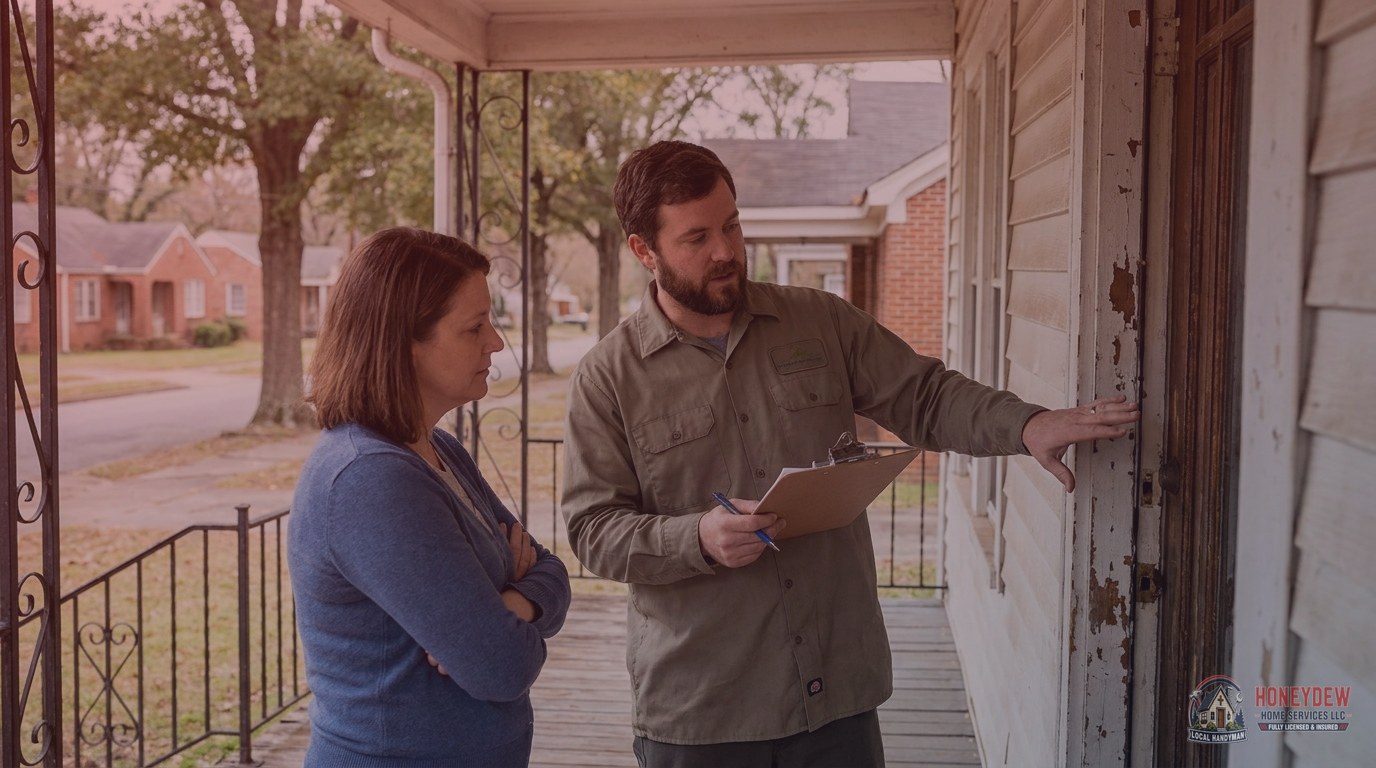
A licensed residential handyman scope covers the majority of repairs older Griffin homes need without the overhead a full general contractor carries. The handyman work for older Griffin homes spans categories from rotted window trim to leaking shutoff valves, all inside the licensed scope.
Kenny Neville knows where rot typically hides in Griffin’s older neighborhoods and which plumbing era to expect behind the walls. A 1960s ranch plumbed in galvanized steel gets a different look than a 1990s build on copper.
When a job uncovers suspect materials or an issue that exceeds handyman scope, such as a full repipe, Kenny Neville flags the problem and pauses the work rather than proceeding unsafely. Popcorn ceiling patching in pre-1980 Griffin homes requires asbestos testing before any sanding or scraping, and a licensed handyman flags that boundary and holds the repair until a certified test comes back. That pause protects the homeowner.
Sources
- Homes.com, “Griffin, GA City Guide – Spalding County” (2026)
- Homes.com, “About Spalding County | Schools, Demographics, Things to Do” (2026)
- National Law Review, “The Typical American Home Just Hit 44 Years Old, and Maintenance Costs Run 76% Higher on Aging Houses” (2026)
- Construction Coverage, “American Cities With the Oldest Homes [2026 Edition]” (2026)
- The MortgagePoint, “Aging U.S. Housing Stock Driving Higher Repair Costs for Homeowners” (2026)
- U.S. Census Bureau, “Cost of Improving and Maintaining Older Homes Higher for New Owners” (2023)
- Professional Engineering Inspections, Inc., “Aging Galvanized Pipe” (2024)
- Square One Insurance, “Galvanized Steel Plumbing | Issues, Lifespan and More” (2025)
- InspectandTest.net, “Popcorn Ceiling Asbestos Testing: 2026 Homeowner Guide” (2026)