
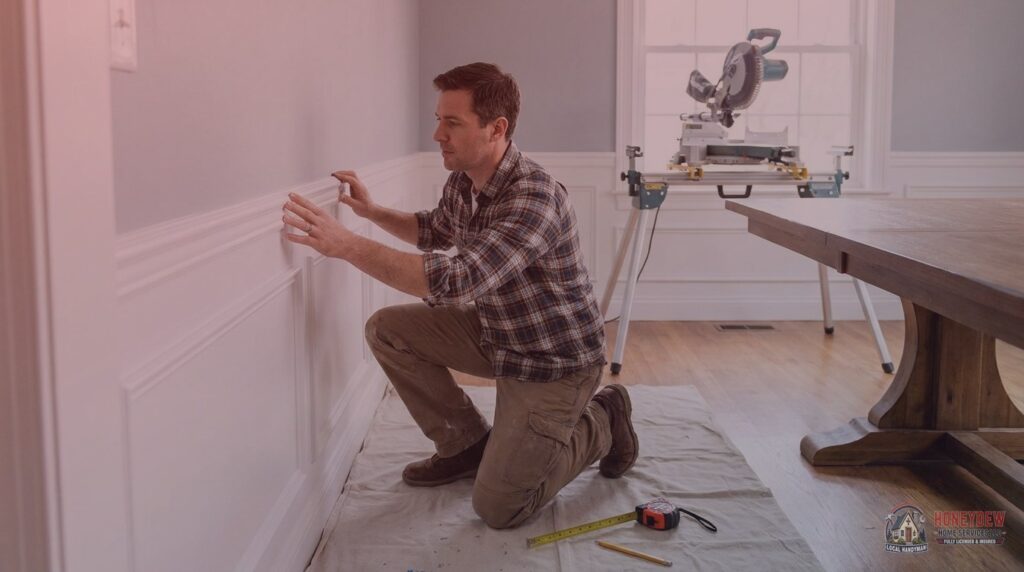
Kenny Neville provides licensed residential chair rail installation in Hampton, GA, handling profile selection, wall preparation, precise mitered cuts, and finishing as one complete service. Hampton homeowners hire Kenny Neville to get a clean, level, lasting chair rail without the alignment errors that frustrate most DIY attempts. Kenny Neville keeps the process simple, from the first estimate to the final caulk line, so the finished trim looks right the day it goes up.
What is chair rail and why do Hampton homeowners add it?
Chair rail is a horizontal decorative molding mounted on interior walls, historically installed to protect plaster from chair backs. Hampton homeowners add chair rail to divide two-tone paint schemes, give dining rooms and hallways visual weight, and restore period-appropriate detail in older builds.
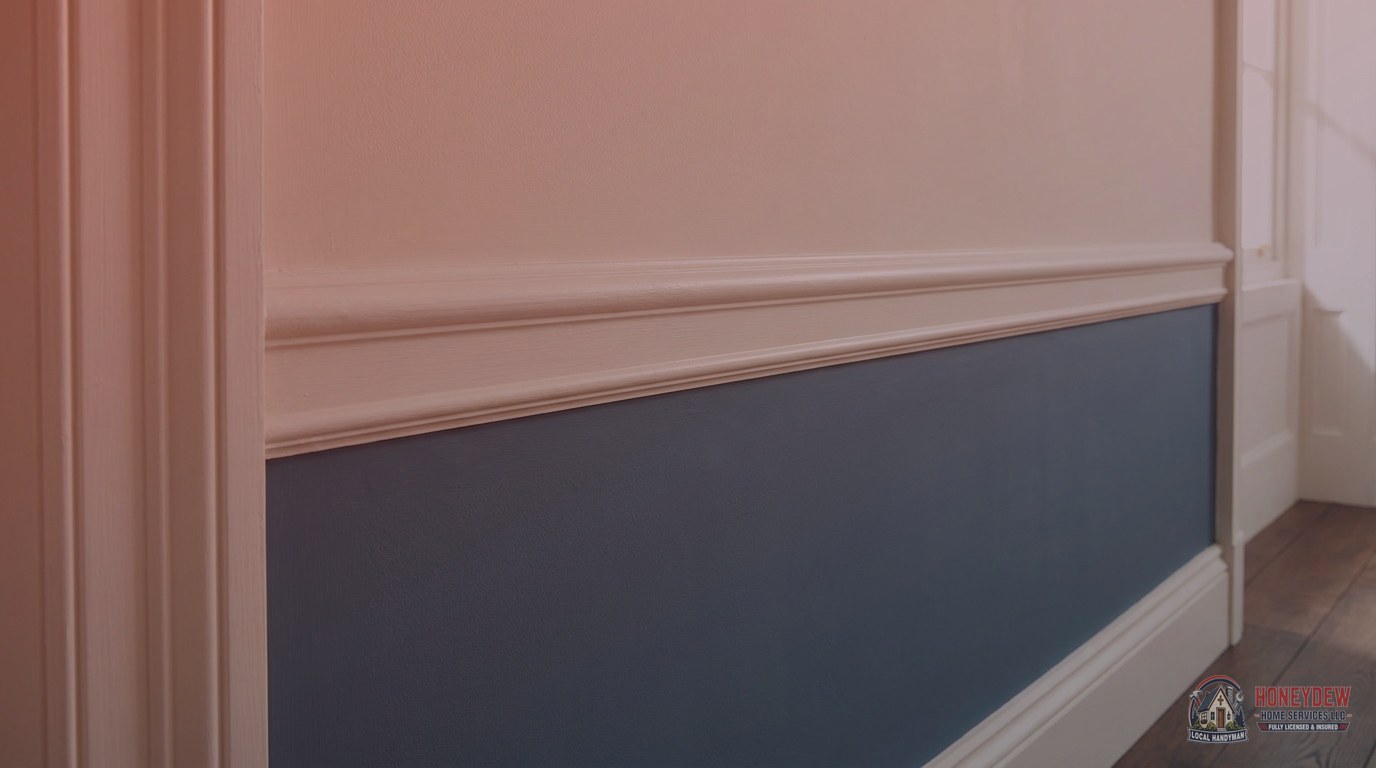
According to engineerfix.com, chair rail historically acted as a protective barrier that shielded wall surfaces from scuffs caused by chair backs, while today the molding’s main role is aesthetic. That origin explains both the name and the traditional placement: chair backs once struck bare plaster at that height, and the rail absorbed the contact. Modern installations keep the same proportions because the horizontal line flatters a room, not because walls still need armor.
Standard chair rail height applies to roughly one-third of wall height from the floor, typically 32 to 36 inches in rooms with 8-foot ceilings. The measurement is proportional, not fixed. A 9-foot ceiling shifts the range upward, and a taller ceiling shifts the range further still. Installing chair rail at a flat 36 inches regardless of ceiling height is the most common DIY error, and the result reads visually off: squat in a tall room, cramped in a low one. Getting the proportion right matters more than the profile or the paint color.
Hampton homeowners typically request chair rail for three reasons:
- Two-tone paint separation. The rail forms a crisp break line between a darker wall color below and a lighter color above.
- Visual weight in dining rooms and hallways. The horizontal line grounds long walls and makes formal rooms feel finished.
- Period detail in older builds. Chair rail restores the trim character of older Hampton homes where original molding was removed or never installed.
Material choice follows the planned finish:
- Paint-grade MDF. Smooth, affordable, and takes paint evenly.
- Finger-jointed pine. Real wood at a moderate price, suited to painted finishes.
- Solid hardwood. The right pick when the rail will be stained rather than painted.
Chair rail pairs naturally with wainscoting panels below and a contrasting paint color above. Homeowners considering that fuller treatment can discuss scope with Kenny during the same visit.
Why hire Kenny Neville for chair rail installation in Hampton, GA?
Hampton, GA homeowners seeking licensed residential chair rail installation hire Kenny Neville because Kenny Neville’s licensed residential handyman service knows local ranch, split-level, and traditional construction, corrects out-of-plumb walls, and completes every chair rail project from start to finish without subcontractors.
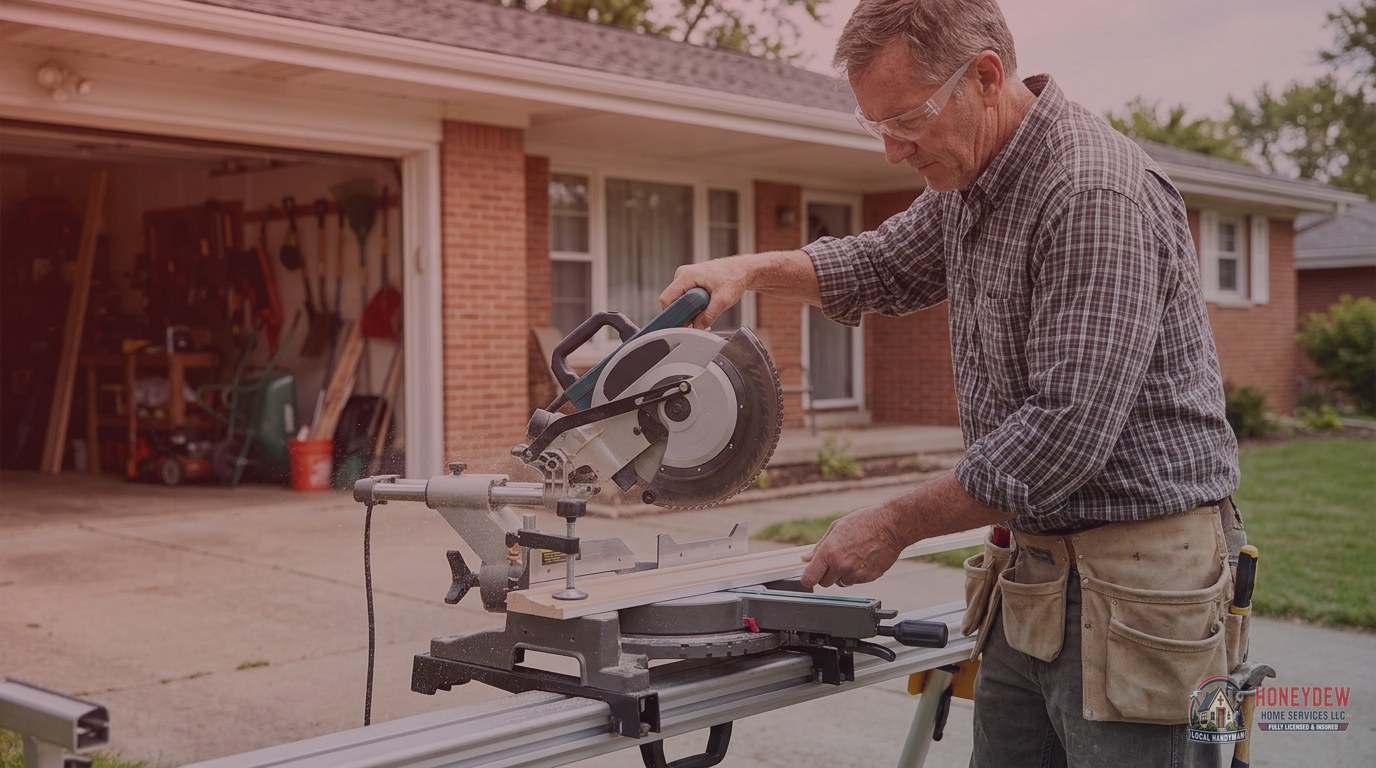
1. Licensed and genuinely local. Kenny Neville operates a licensed residential handyman service in Hampton and the surrounding Henry County communities, providing local handyman help in Hampton that covers chair rail installation along with trim, molding & baseboard repair.
2. Familiar with Hampton construction. Ranch, split-level, and traditional builds make up much of the local housing stock, and walls in those homes can sit out of plumb. Henry County’s housing stock skews toward relatively recent construction, according to Point2Homes data drawn from the U.S. Census Bureau. Kenny Neville checks each wall for plumb and adjusts the chair rail line so the reveal stays level across the room.
3. One trade, no subcontracting. Kenny Neville performs the chair rail installation personally, from measuring and material selection through cutting, nailing, and caulking.
What does the chair rail installation process include?
Chair rail installation contains wall stud location, height measurement and marking, profile selection, miter cuts at corners, adhesive and nail fastening, caulking, and paint-ready finishing. Chair rail installation precedes final paint or wallpaper application in a two-tone wall treatment, so every phase ends with a surface the painter can take over directly.
1. Wall prep and layout. Kenny Neville locates the studs, marks the rail height from the finished floor following the one-third standard build-construct.com documents, and snaps a level line along the full run so the rail stays true even where a floor slopes. 2. Precision corner cuts. Outside corners get mitered cuts, while inside corners get coped joints that absorb wall irregularities. Many Hampton ranch-style and split-level homes have slight bows or out-of-plumb corners, so a DIY cut list built on clean 45-degree miters fails on-site. Cope-and-fit work matches the rail to the walls as they actually stand, and that judgment is what experience in these specific homes provides. 3. Fastening. Kenny Neville runs construction adhesive along the back of the rail and drives finish nails into the studs, leaving a secure, paint-ready surface. 4. Caulking. Kenny Neville caulks the gaps at the top and bottom edges before handoff for painting.
The interior trim and rail installation covers related finish carpentry such as baseboards, door casing, and crown molding.