
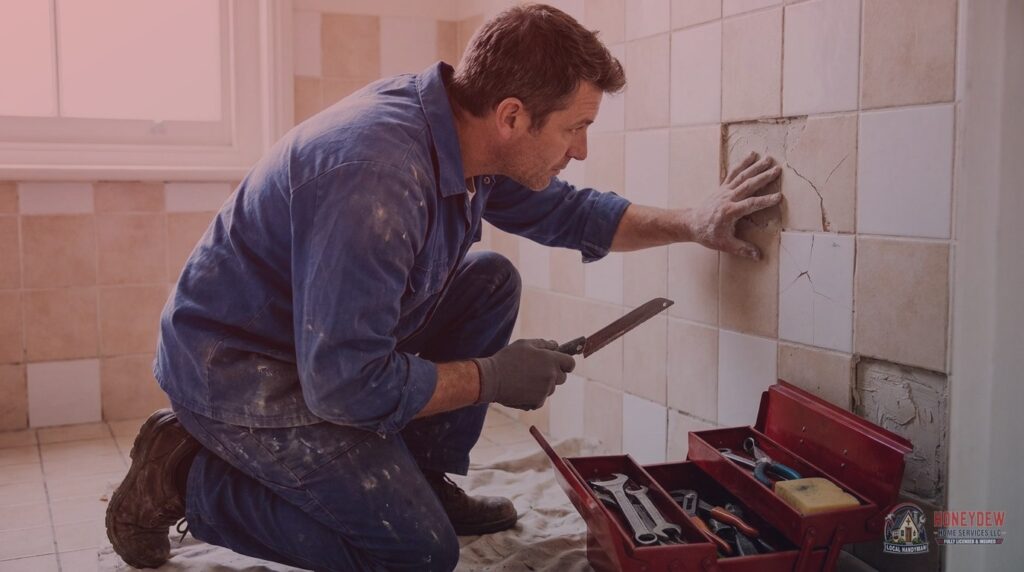
Bathroom tile damage ranges from a single cracked tile to widespread grout failure and substrate damage, and the right fix depends on the scope of damage, tile availability, and the homeowner’s timeline rather than the visible surface condition alone. Kenny Neville’s licensed handyman service helps Middle Georgia homeowners make that call correctly. Choosing wrong costs real money: a full retile the bathroom never needed, or a spot repair that fails within a year.
What are the real differences between bathroom tile repair and a full retile?
Bathroom tile repair removes and replaces individual damaged tiles or small clusters without disturbing the surrounding field, while a full retile demolishes the entire tile installation down to the substrate and rebuilds it from scratch. Grout-only repair sits below both options: it restores the joints without removing a single tile.
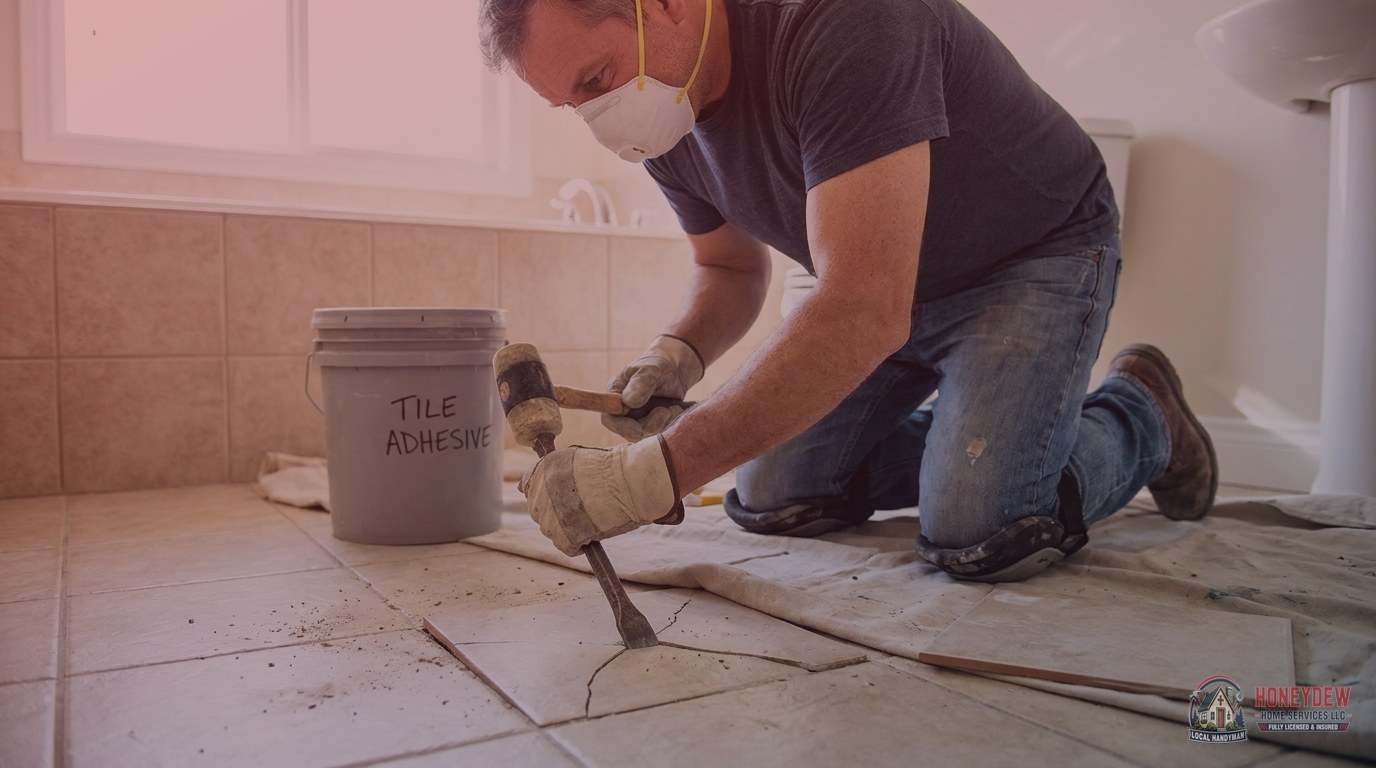
The three scopes differ in what gets removed and what stays in place:
- Spot repair targets the damaged tiles only. A handyman cuts out the grout around the affected tiles, lifts them, cleans the setting bed, and sets replacements in fresh adhesive while the surrounding field stays untouched. Spot repair is the right scope when damage is localized, the substrate underneath is sound, and a matching replacement tile is available.
- Full retile removes every tile, the old mortar bed, and often the waterproofing layer beneath. The installer then rebuilds the entire assembly on a prepared substrate. A full retile is the correct scope when failure is widespread or the problem originates below the tile surface.
- Grout-only repair keeps every tile in place and addresses only the joints. When tiles are structurally sound but the grout lines are cracked, dark, or crumbling, a regrout or reseal should be considered first, because it is a separate, lower-cost service that does not require tile removal.
The correct scope protects long-term durability, not just the upfront budget. Ceramic tile rarely fails on its own; failures usually start underneath, in the adhesive bond, the mortar bed, or a moving substrate. A spot repair installed over a systemic problem anchors new tile to the same failing foundation, so the replacements loosen again and the homeowner pays for the same floor twice. A full retile eliminates that risk by resetting the layers that keep water out, which matters in a wet room. According to the Mosaic Center, TCNA standards require a minimum of 95% mortar coverage in showers, with full support at tile edges and corners. TileLetter reports that voids left in mortar become pockets where water collects, which can lead to efflorescence and other moisture-related problems. The reverse mistake wastes money too: demolishing a sound field to fix one cracked tile adds cost without adding years to the installation.
Homeowners can gauge how far a failure extends with a simple tap test. Fonster reported in 2025 that solid tiles produce a high, solid “tink” sound when tapped, while debonding tiles return a lower, drum-like hollow sound that signals voids where the adhesive has let go. Hollow sounds across many tiles point toward a full retile; one isolated hollow tile points toward spot repair. The scope must match the failure. A licensed handyman applies the bathroom tile repair vs. full retile decision framework by identifying the failure’s cause and extent before recommending either scope.
When Does Spot Tile Repair Make Sense, and When Does It Fall Short?
Spot tile repair makes sense when damage affects one to three tiles with clean, straight cracks, the substrate stays solid and dry, and a matching replacement tile is available. Widespread damage, a failed substrate, or discontinued tile pushes the decision toward a full retile.
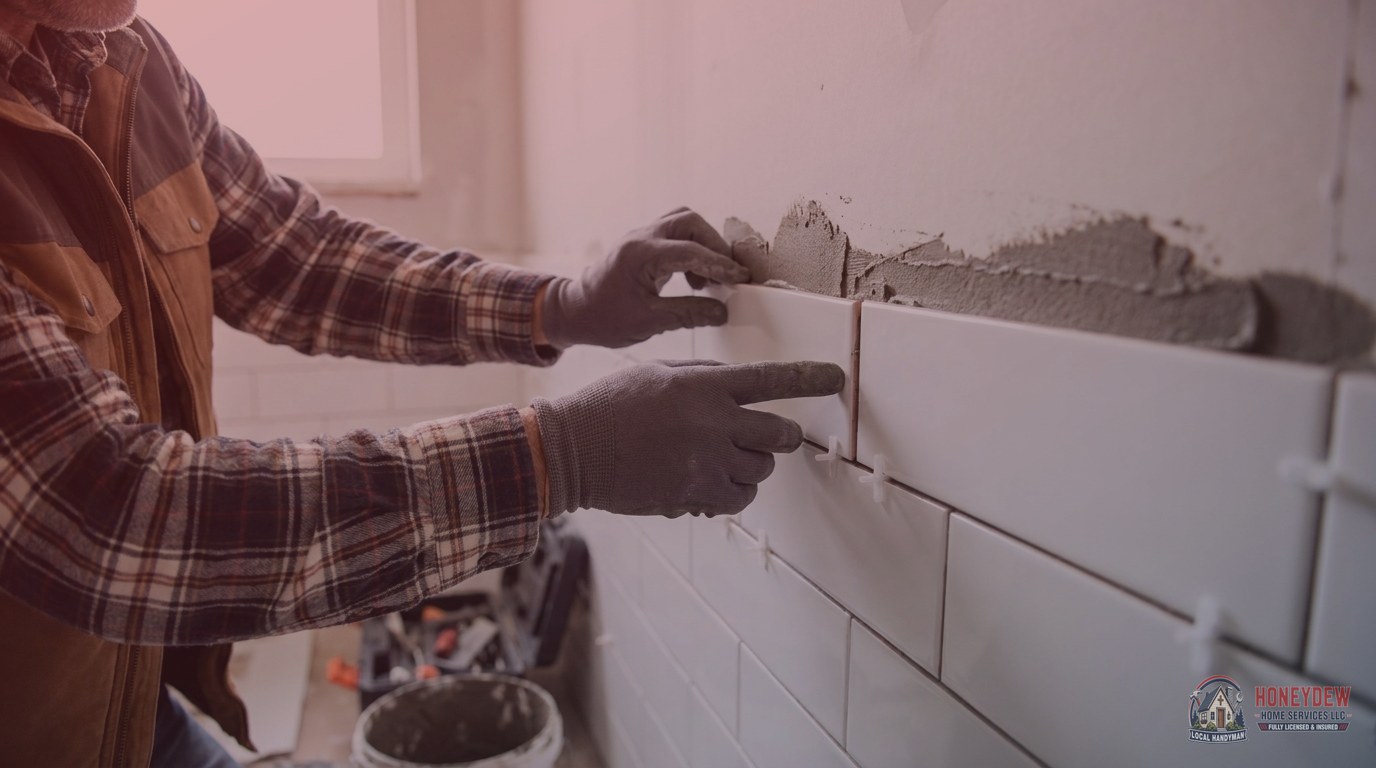
Spot tile repair applies to isolated damage affecting fewer than 10 to 15 percent of the total tile surface, with no movement in the tiles surrounding the cracked ones. The substrate beneath must be intact, meaning zero flex underfoot, no soft spots, and no grout staining from moisture wicking upward. According to The Vertex Companies (2023), tapping the top of a tile and hearing a dull, hollow sound signals debonding. TileLetter reports that a field where 25 percent of tiles sound hollow while 75 percent sound solid raises a red flag for debonding, and debonding moves the job beyond a patch.
Tile matching is the most underestimated repair barrier. Even a replacement from the same manufacturer can differ in shade, texture, or glaze lot, and a discontinued tile causes a visible patch mismatch that makes spot repair a poor cosmetic outcome. On a prominent bathroom wall, a mismatched patch often looks worse than a full retile.
Location decides whether a visible patch is acceptable. A repair behind a toilet hides well; a patch at eye level in a master bath does not. For rental properties or homes being prepared for sale, that cosmetic call is a legitimate decision factor: a low-visibility bathroom near a laundry room can tolerate a visible patch where a master bath will not.
Porcelain tile raises the difficulty. Porcelain is harder and more brittle than ceramic tile, so clean removal for a spot repair is harder to guarantee, and a borderline case on a large-format porcelain field tips toward retiling. When the conditions do line up, the fix stays affordable: according to Block Renovation (2026), a few cracked or chipped tiles can be replaced individually for $25 to $75 each.
What signs tell you a full retile is unavoidable?
A full retile is unavoidable when hollow-sounding tiles spread across much of the installation, the substrate feels soft or spongy underfoot, multiple grout lines fail at the same time, or mold and white efflorescence stain the grout. Each sign confirms moisture damage behind the tile.
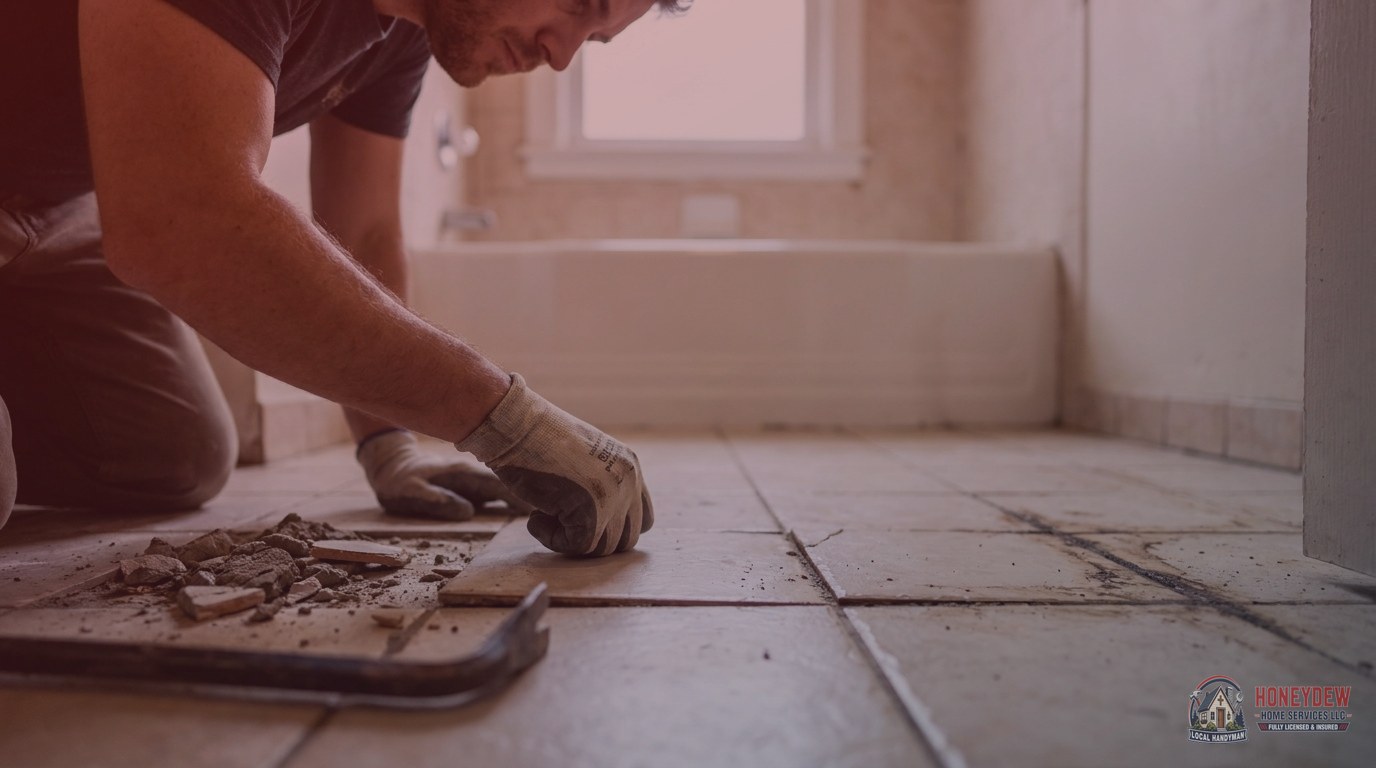
The hollow-tap test is the only reliable DIY method for detecting debonded tiles before the tiles crack. Homeowners tap each tile with a coin or knuckle and listen for a dull thud instead of a solid ring. When hollow tiles cover more than 15% of the installation, retiling becomes inevitable regardless of surface appearance.
A soft or spongy feel underfoot signals water infiltration into the tile backer board or mortar bed. A full retile is required when the substrate (backer board or mortar bed) shows moisture damage, soft spots, or mold behind tiles. Cleanup & Total Restoration (2023) reports that mold can begin growing within 24 to 48 hours once water gets underneath tiles.
Grout failing along multiple lines at once, especially near the shower pan or floor-wall junction, shows moisture has moved past the tile surface into the setting bed. One cracked line accepts regrouting. Simultaneous failure across several lines points to a wet substrate.
Visible mold or efflorescence, the white mineral deposits that form along grout lines, indicates chronic moisture trapped behind the tile. The National Tile Authority (2025) ties secondary efflorescence to ongoing water infiltration from sources such as groundwater, rainwater intrusion, or failed waterproofing membranes.
Georgia humidity accelerates grout deterioration and adhesive bond failure in bathroom tile installations. That humidity penetrates hairline tile cracks and freeze-thaws through seasonal temperature swings in unheated spaces like laundry rooms and garages. The cycle breaks down the substrate and turns a seemingly minor repair into a retile project when left unaddressed for more than one season.
How do repair and retile costs compare for a Georgia bathroom?
Spot repair on one to five bathroom tiles runs $280 to $662 according to Angi (2026), while a full retile of a small bathroom costs roughly $3,500 to $5,500 according to Block Renovation (2026). The cost of a full retile exceeds spot repair cost by a significant margin, making repair the correct choice when damage is truly isolated.

Those figures are national benchmarks, not Middle Georgia quotes. The Middle Georgia repair cost estimates detail local labor and material pricing, and an on-site visit pins down the exact number for your bathroom.
Spot repair pricing. HomeAdvisor (2025) reports that most homeowners spend $280 to $659 on tile and grout repairs, with an average of $463, and that range works as the benchmark for a one-to-five-tile job, labor and materials included. For genuinely isolated damage, a few hundred dollars solves the problem.
Full retile pricing. Block Renovation (2026) puts a small bathroom retile at $3,500 to $5,500 and a large one at $8,500 to $15,000, with demolition and disposal adding $1 to $5 per square foot. Substrate repair pushes the total higher: HomeGuide (2026) reports that fixing water damage behind bathroom tiling costs $1,500 to $2,000.
The false economy trap. A spot repair over a soft, water-damaged substrate buys months, not years. The homeowner pays for the repair, then pays the full retile cost within two years when the surrounding tiles fail. Repair only saves money when the damage is genuinely isolated.
How an assessment sets the real number:
1. Kenny Neville provides a licensed on-site assessment to confirm whether substrate damage is present before recommending repair versus retile. 2. The assessment counts failed tiles, tests grout and substrate firmness, and checks for moisture behind the wall or floor. 3. The homeowner receives a written scope and firm price before any cost commitment, so the repair-versus-retile decision rests on the bathroom’s actual condition.
Sources
- Angi, “How Much Does Bathroom Tile Repair Cost? [2026 Data]” (2026)
- HomeAdvisor, “How Much Does Grout and Tile Repair Cost in 2025?” (2025)
- HomeGuide, “How Much Does It Cost to Repair Tile and Grout? (2026)” (2026)
- Block Renovation, “Bathroom Tile Installation Cost: 2026 Price Guide” (2026)
- HomeAdvisor, “How Much Does It Cost to Tile a Shower? [2025 Data]” (2025)
- Angi, “How Much Does Water Damage Restoration Cost? [2026 Data]” (2026)
- National Tile Authority, “Efflorescence on Tile and Grout: Causes and Treatment” (2025)
- TileLetter, “Hollow-sounding tiles may signal installation problems”
- The Vertex Companies, “Flooring Tile Issues” (2023)
- Fonster, “Tiles Lifting Off Floor? Causes, Diagnosis, Repair & Prevention Guide” (2025)
- Mosaic Center, “Understanding the TCNA Handbook: A Professional’s Guide to Tile Installation Standards”