
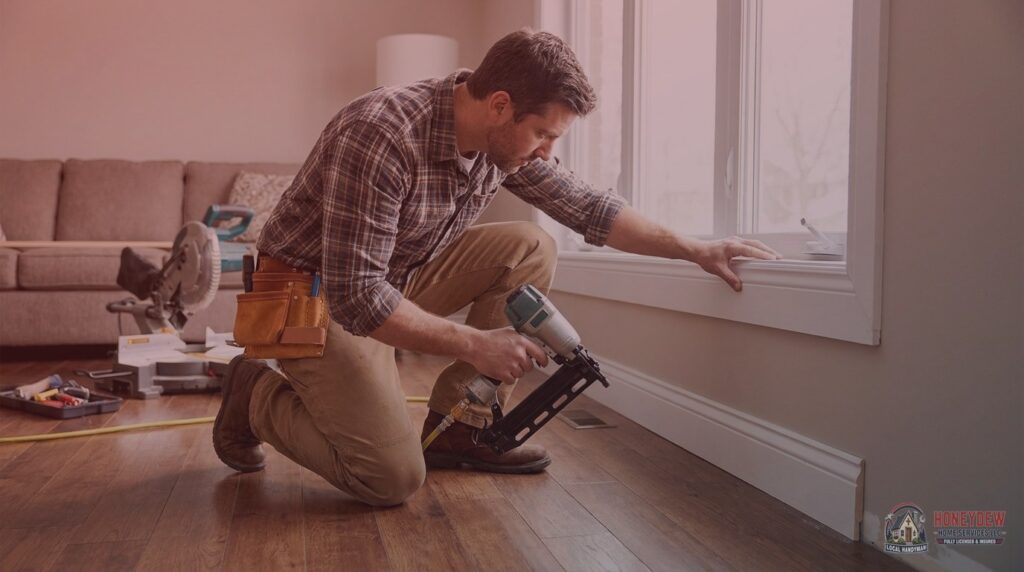
Kenny Neville provides licensed baseboard repair and replacement to homeowners in Locust Grove, GA. Kenny Neville repairs cracked, gouged, and water-damaged boards, and installs new trim when a section is missing or too damaged to save, matching the existing profile so the work disappears into the room. Kenny Neville restores the finished look of a room without the cost or disruption of a general contractor.
Does Kenny Neville repair and replace baseboards in Locust Grove, GA?
Yes. Kenny Neville is a licensed residential handyman serving Locust Grove, GA, and baseboard repair and replacement is a named service within his trim and molding work. Homeowners book the service directly, with no general contractor required.
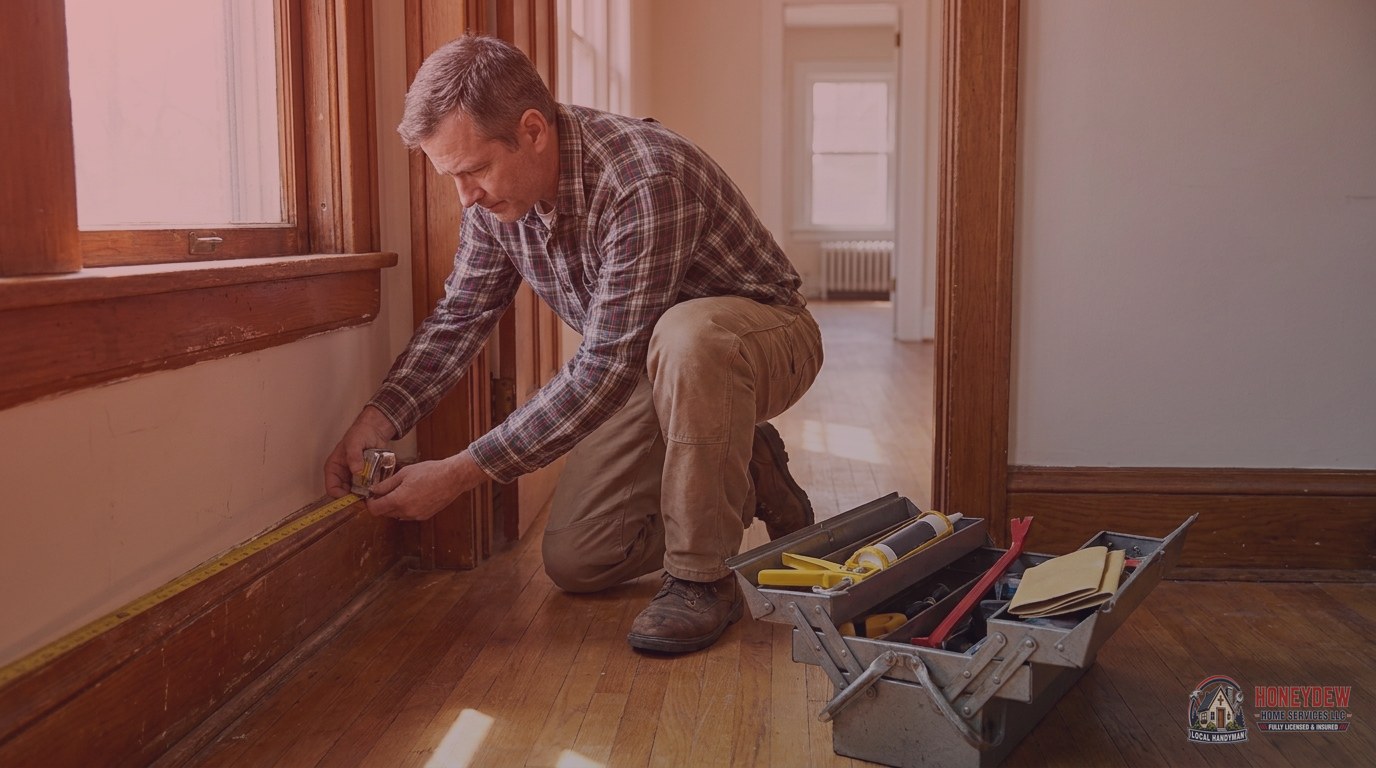
Baseboard repair and replacement sits inside the broader trim and molding category, which also covers chair rail, crown molding, and door casing. The baseboard repair Locust Grove GA service handles four common problems: cosmetic damage such as dents, scuffs, and chipped paint, missing sections, gaps left after flooring or renovation work, and pet damage from chewing or scratching. Each fix restores the finished line where wall meets floor, the detail that makes a room look cared for.
A handyman can perform baseboard repair and replacement without a general contractor because baseboard work does not require a structural or specialty trade license in Georgia, which makes Kenny Neville’s licensed handyman credential the appropriate and cost-effective hire for this scope. According to Adapt Digital Solutions, Georgia has no formal handyman license, and general contracting work valued below $2,500 requires no state license, while licensed specialty trades such as electrical, plumbing, and HVAC always require the appropriate trade license regardless of project size. BellaFSM confirms that general maintenance and repair needs no Georgia handyman license, and only projects above $2,500 call for a residential or general contractor’s license. For added peace of mind, HandymanStartup.com reports that licensed Georgia handymen holding a Residential Basic Contractor’s License carry General Liability Insurance of $300,000 per occurrence.
Chair rail and door casing repairs in the same room can typically be combined into a single visit, so mention every trim issue when requesting a quote. Homeowners with work beyond trim can also book full-service home repairs nearby, keeping the whole list with one licensed local.
When should a baseboard be repaired versus fully replaced?
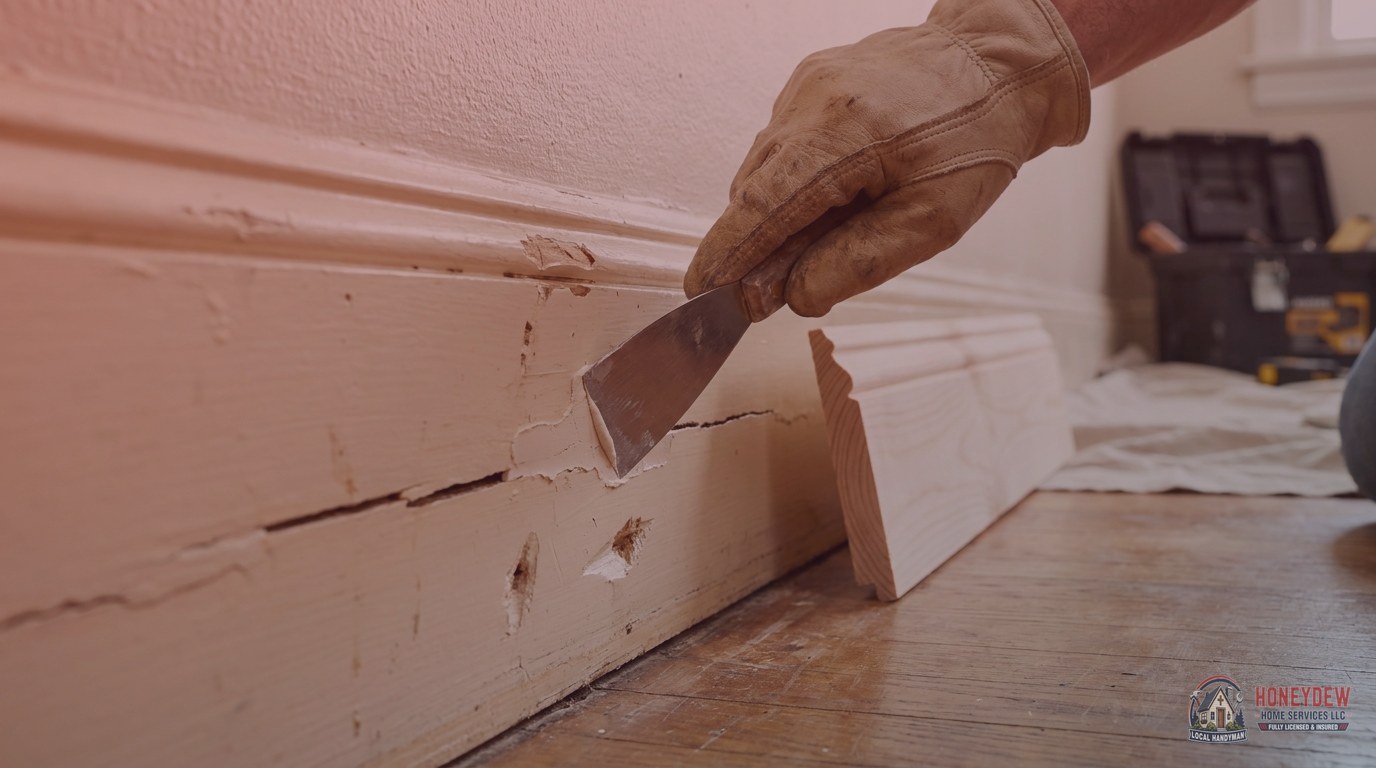
A baseboard should be repaired when the damage stays on the surface: cracks, gouges, minor dents, small gaps at corners or seams, and warped or partially missing sections. A baseboard should be fully replaced when the board is water-swollen, crumbling, structurally split, or missing entirely, because severely water-damaged and structurally compromised boards cannot hold filler or fasteners.
| Baseboard condition | Repair or replace |
|---|---|
| Cracks, gouges, minor dents, nail holes | Repair with wood filler, sanding, and paint |
| Small gaps at corners or seams | Repair with paintable caulk |
| Warped or partially missing section | Repair by patching or splicing the section |
| Water-swollen or crumbling board | Replace the full section |
| Structurally split board | Replace the full section |
| Fully missing board | Replace with a profile-matched board |
Material type settles the question before anything else. MDF baseboards carry a higher susceptibility to moisture damage than solid wood or PVC alternatives, and once MDF is moisture-compromised the board cannot absorb filler repairs, so full-section replacement is the only lasting fix. FunGuy Mold Inspections reports that moisture makes MDF swell, delaminate, and trap mold spores internally within 24 to 48 hours, and that swollen MDF must be removed rather than sanitized. MDF Skirting World reports that drying does not restore a swollen board’s original dimensions or strength, leaving 2–5% residual swelling behind. A solid wood board can often be dried, sanded, and filled, and PVC does not absorb water at all.
The MDF distinction, the one most generic repair guides skip, drives the repair decision across Locust Grove. Most homes in the city built from the 1990s through the 2010s were trimmed with MDF baseboards, and Point2Homes reports that 31% of local housing stock dates to 2000 through 2009 alone. In those homes, the baseboard replacement and repair decision usually comes down to a single factor: whether water has reached the board.
What does the baseboard repair and replacement process include?
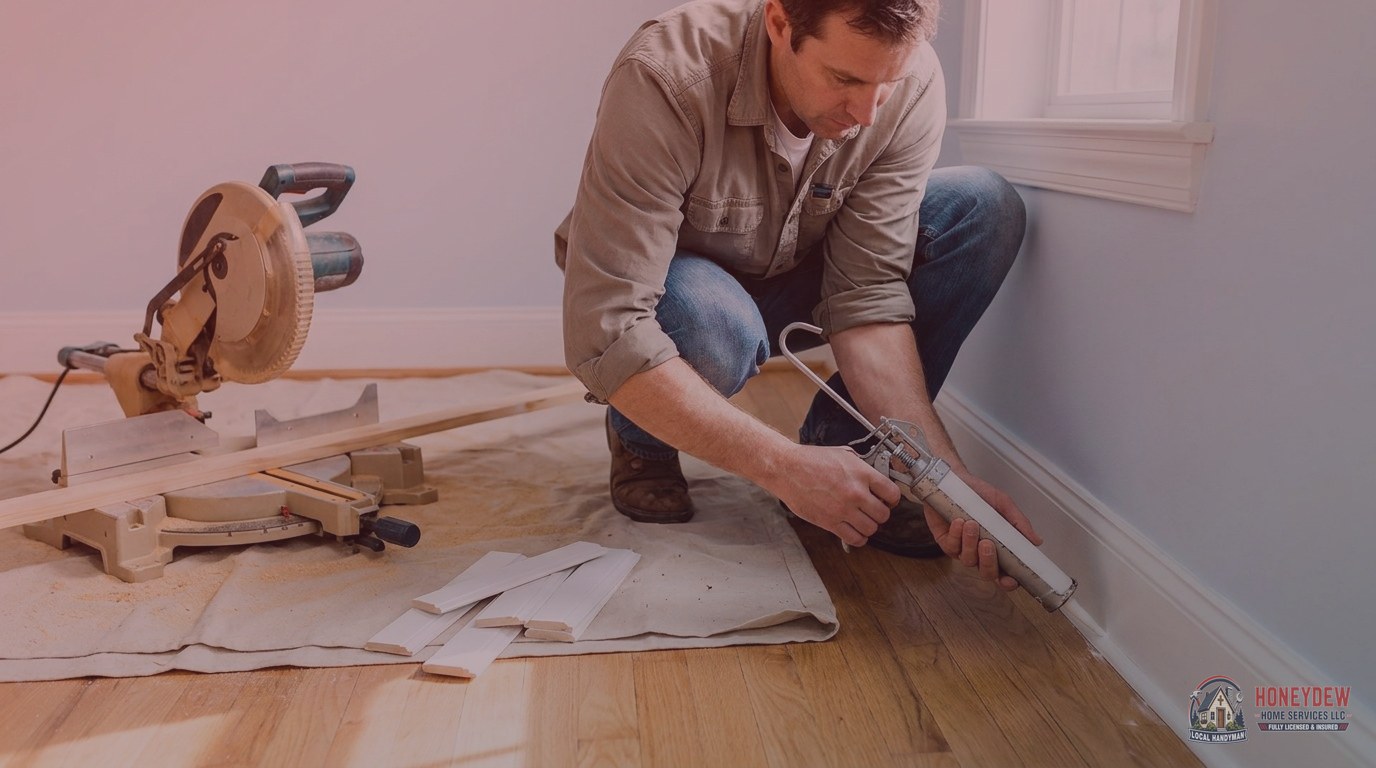
Baseboard repair and replacement contains removal, material matching, cutting, fastening, caulking, and paint-ready finishing. Kenny Neville’s licensed handyman service in Locust Grove, GA follows five steps from profile assessment to a finished, paint-ready surface.
1. Assess the existing profile and source matching stock. The technician measures the baseboard’s height, thickness, and profile shape, then sources replacement stock that matches. Older Locust Grove homes sometimes carry discontinued profiles, so a close match matters more than a fast one.
2. Remove the damaged section without harming the drywall. The technician scores the caulk line, pries the damaged baseboard away from the wall, and pulls finish nails through the back of the board. Careful removal keeps the drywall paper and corner bead intact so the wall needs no patching.
3. Cut, fit, and fasten the new material. The technician cuts the replacement baseboard to length, copes or miters the joints at corners, and fastens the board into wall studs with finish nails. Tight joints at inside corners are what separate a clean job from an obvious patch.
4. Caulk seams and fill nail holes. The technician runs caulk along the top edge and corner joints, fills every nail hole, and sands the surface smooth.
5. Deliver a paint-ready finish. The job ends with a surface ready for paint, not a surface ready for more prep work.
That last step deserves a firm word. A paint-ready finish, meaning caulked seams, filled nail holes, and sanded smooth, is not automatically included by every provider. Homeowners should confirm this is part of the scope in any quote before booking, because skipping it leaves visible defects that defeat the purpose of the repair.
One wrinkle worth knowing: stained baseboard requires a different approach than painted. New stained wood must match the existing boards in grain and tone, which takes longer than painting over a repair. Painted MDF or pine profiles finish faster by comparison.
Which Locust Grove homeowners typically need baseboard repair?
Locust Grove homeowners typically need baseboard repair in four situations: preparing a house for sale, completing a flooring replacement, fixing pet damage along walls, and finishing water-damage restoration. Kenny Neville’s baseboard service serves Locust Grove homeowners preparing to sell, renovate, or restore rooms after water or pet damage.
Much of this demand traces to the local housing stock. UnitedStatesZipCodes.org reports 4,765 homes in ZIP code 30248 were built in the 1990s, and original trim in those houses now carries decades of dents, gaps, and layered paint.
Sellers call for cosmetic repairs before listing, because buyers notice chipped, gapped, or stained baseboards during walkthroughs and fresh trim photographs as a maintained home. The U.S. Census Bureau’s 2020 through 2024 American Community Survey estimates put Locust Grove’s owner-occupied rate at 83.7% and the median owner-occupied home value at $307,300, so sellers here protect real equity with small fixes.
Flooring replacements create baseboard work when installers remove old baseboards during tear-out or crack the trim while prying it loose. New flooring also sits at a different height than the old floor, which leaves a visible paint line or gap the old baseboards no longer cover.
Pet damage concentrates along the base of walls, where dogs chew corners and cats scratch trim at nose and paw level. Rooms with this wear usually need only the damaged sections replaced, not a full re-trim.
Water-damage restoration leaves baseboard replacement as the last step before the room is finished. Swollen or mold-stained baseboards come out after drywall and flooring dry, and homeowners call a handyman to close out the job.
Sources
- FunGuy Mold Inspections, “MDF Water Damage & Mold Growth: Causes, Inspection, and Replacement Rules”
- MDF Skirting World, “Is MDF Waterproof?”
- UnitedStatesZipCodes.org, “ZIP Code 30248 Map, Demographics, More for Locust Grove, GA”
- Point2Homes, “Locust Grove, GA Demographics: Population, Income, and More”
- U.S. Census Bureau, “U.S. Census Bureau QuickFacts: Locust Grove city, Georgia” (2024)
- Adapt Digital Solutions, “Georgia Contractor License Requirements (2026): $2,500 Rule”
- BellaFSM, “The Ultimate Guide to Obtaining a Handyman License and Growing Your Business”
- HandymanStartup.com, “Handyman Licenses in Georgia – Everything You Need To Know”