
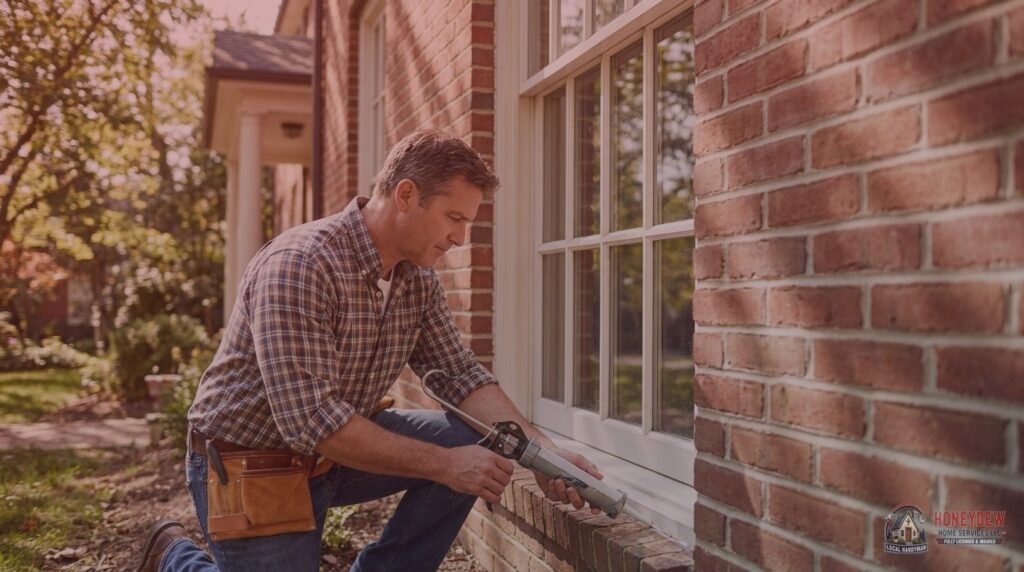
Kenny Neville provides licensed residential window repair and caulking services for homeowners across the greater McDonough and Fayetteville, Georgia area. Kenny Neville’s window work targets the failure points Georgia’s hot, humid climate creates: broken locks, fogged double-pane glass, blown seals, and cracked caulk. Kenny Neville repairs these problems directly, so homeowners get secure, efficient windows without paying for full replacement.
What window repair and caulking services does Kenny Neville provide?
Kenny Neville provides licensed residential window repair and caulking services in McDonough and Fayetteville, GA, covering caulking, seal inspection, foggy double-pane glass diagnosis, broken lock repair, screen repair, and weatherstripping for homeowners across surrounding Georgia communities during one service call.
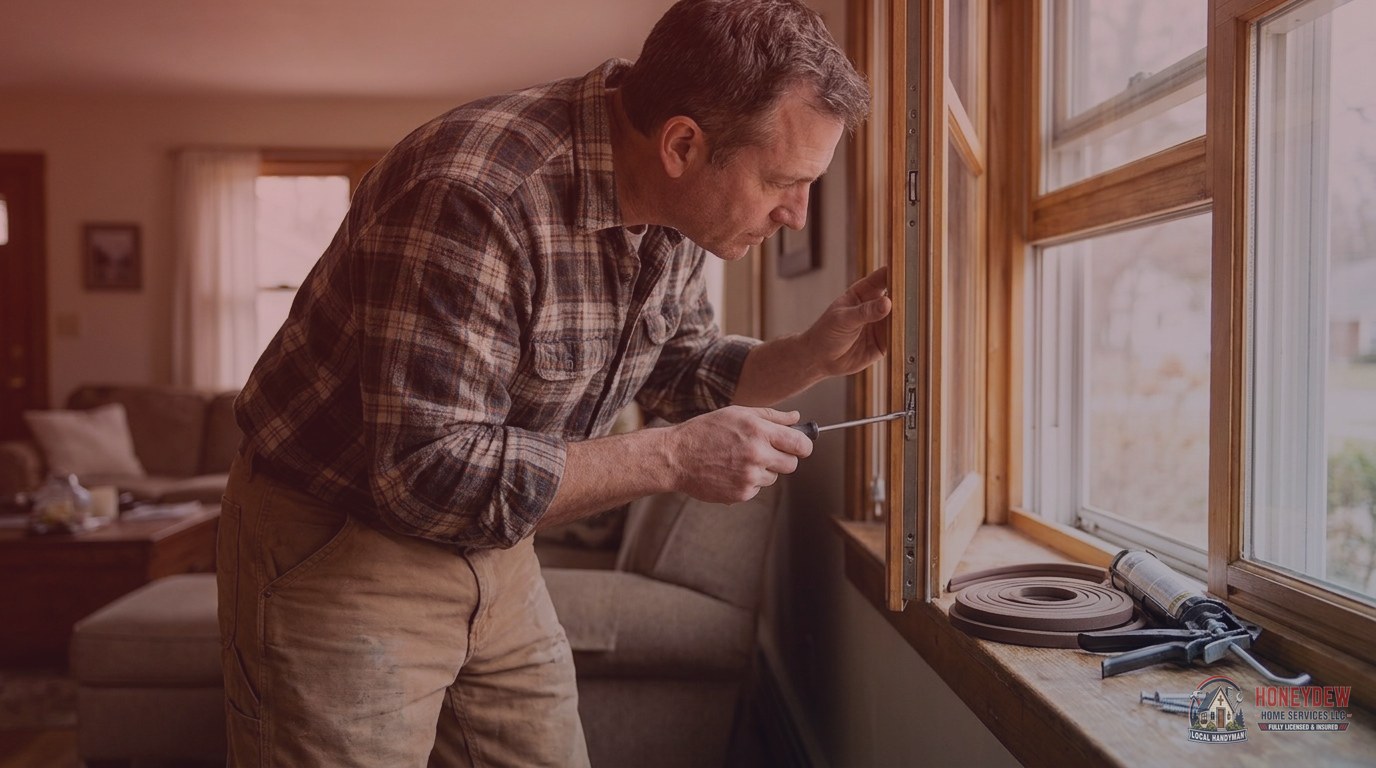
Kenny Neville works as a licensed residential handyman, not a window replacement company. The service handles any repairable window problem, from deteriorated caulk to failed insulated glass seals. Full window replacement falls outside the handyman scope, which keeps every visit focused on restoring the windows a home already has.
The core work targets the four most common window failures. Deteriorated caulk and worn weatherstripping let water and outside air pass around the frame, so Kenny Neville removes the old material and reseals the frame. Fog between the panes of a double-pane window signals a failed insulated glass unit seal, and the diagnosis identifies exactly which unit has failed. Kenny Neville repairs broken locks and latches so the window closes and secures properly.
Kenny Neville’s window repair service contains caulking, seal assessment, lock repair, and screen repair under one service call. A homeowner with cracked caulk, a stuck lock, and a foggy pane gets all three handled in a single visit instead of scheduling separate contractors.
Homeowners can add window screen repair and replacement to the same visit, which matters in Georgia summers when screens stay in constant use. The torn window screens fixed locally service covers screen-specific work for McDonough homeowners with heavier screen damage.
For budgeting, homeowners can review recaulking windows: cost and timeline to see typical pricing and learn how long a caulking appointment takes. Homeowners can find window repair and caulking within the broader home repair services Kenny Neville provides throughout McDonough, Fayetteville, and the surrounding south Atlanta communities.
When Does Window Caulking Need to Be Replaced?
Window caulking needs replacement when the bead cracks, pulls away from the frame, opens gaps, discolors, or turns chalky. In Georgia, heat, UV exposure, and humidity push caulk to that failure point years sooner than national timelines suggest.
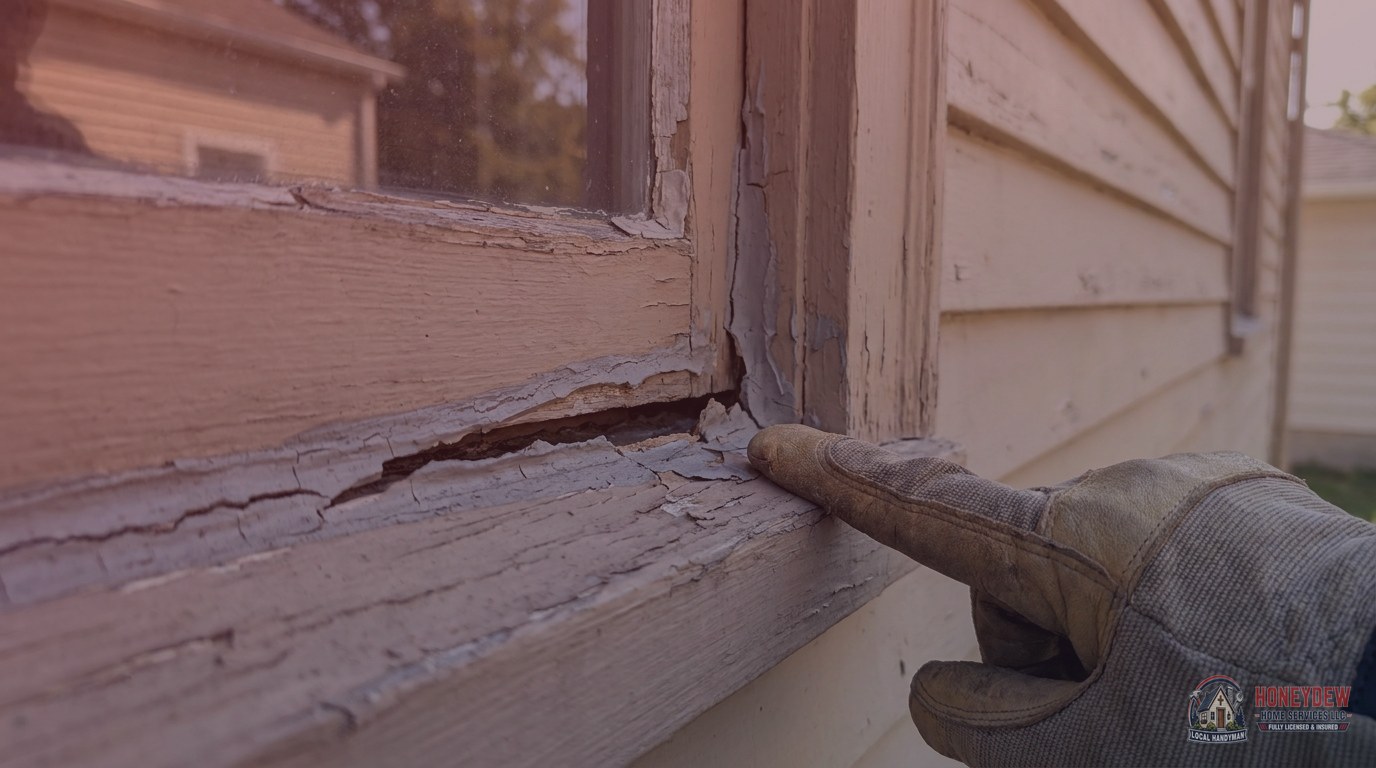
A chalky, powdery texture means the sealant’s polymers have broken down and the bead no longer flexes with the window, even when the caulk still looks intact from across the room.
Georgia’s high heat and humidity cause window caulking failure by accelerating caulk deterioration faster than in cooler climates. Caulk on a Georgia home lasts roughly half the lifespan the same bead would reach in a cooler northern climate, because UV exposure and thermal cycling from extreme summer heat make silicone and latex beads crack and separate from frames. HomeMD (2026) reports that high-performance silicone and polyurethane sealants can last 15 to 20 years under ideal conditions, while FixUpFirst (2026) puts standard paintable latex at 5 to 10 years nationally, with faster failure on south- and west-facing windows. Georgia ranks 12th nationally for average annual UV index at 5.9, according to UVIndexByZip.com (2026), and UVIndexToday.com reports Atlanta’s July UV index has averaged 11.5, a level the WHO classifies as extreme. The exterior caulk failure in Georgia humidity explains why Georgia summers attack window seals harder than in most states.
The cost shows up on the power bill. Failed caulk lets conditioned air escape all summer, and that cooling loss is the expense homeowners notice first. The Georgia climate and caulk lifespan covers local recaulking intervals, typical costs, and what a recaulking visit includes.
A thorough service visit pairs caulking with a weatherstripping inspection, because sash weatherstripping degrades on a similar timeline and a re-caulk that ignores failed weatherstripping still leaks conditioned air.
Can a Foggy Double-Pane Window Be Repaired Without Replacing the Whole Window?
Yes. A foggy double-pane window is a symptom of insulated glass unit (IGU) seal failure, not a glass defect, and a technician can replace the IGU inside the existing frame. Full window replacement becomes necessary only when the frame itself is damaged.
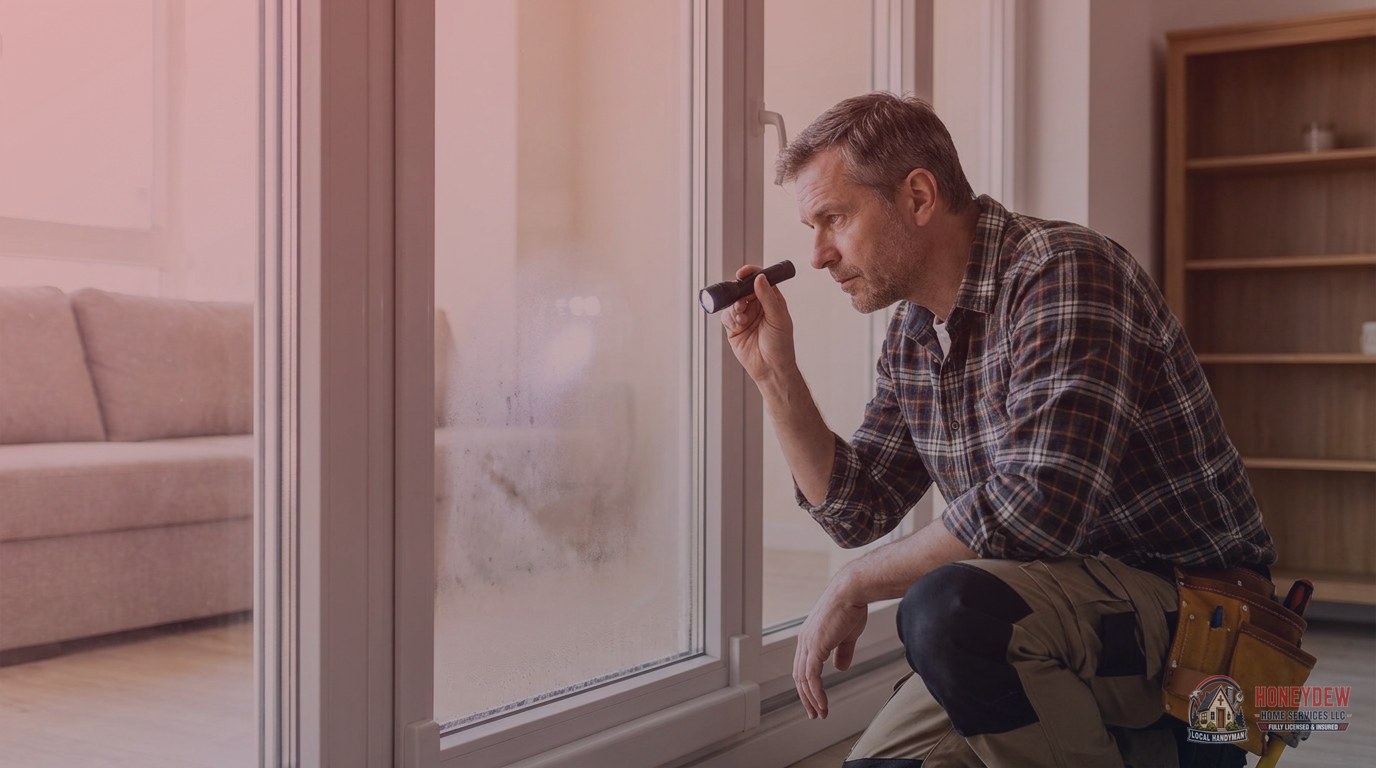
The cloudiness a homeowner notices is condensation trapped between glass panes; the haze forms after the inert argon or krypton gas between the panes escapes through a failed perimeter seal and moist outside air takes its place. The glass itself stays intact, which is why wiping the surface never clears the fog. Moisture on the room-facing surface of the glass tells a different story: high indoor humidity causes that condensation, and the remedy is humidity control rather than window repair. A proper on-site assessment tells the two apart before anyone quotes a repair.
The visible signs of seal breakdown include cracked or shrunken perimeter caulk, fog that worsens with temperature swings, and mineral deposits baked onto the interior glass surfaces. When the diagnosis confirms a failed seal and the frame remains sound, window seal repair precedes full window replacement as the cost-effective first option for most homeowners. According to a 2025 Good Men Project guide, IGU replacement removes only the glass portion while the existing frame, sash, and hardware stay in place, so labor and material costs stay well below a full replacement. The repair versus replacement cost breakdown favors an IGU swap whenever the frame is solid.
Full replacement still earns its place in three situations. The same Good Men Project guidance points homeowners toward full replacement when frames are rotted, warped, or no longer compatible with modern glass standards, which covers both frame damage and obsolete units. Several windows failing at once also changes the math, because one replacement visit for multiple aging units usually costs less per window than repeated repair calls.
What happens if a window lock is broken and why should it be repaired quickly?
A broken window lock carries a dual impact on home security and insurance compliance. The failed lock leaves the window open to forced entry, and an inoperable lock can violate homeowners insurance terms that require working locks on accessible windows. Prompt repair restores both physical protection and policy standing.
Window locks fail in four common ways. A snapped latch leaves the sash unable to catch, a stripped cam spins without drawing the meeting rails together, a misaligned strike prevents the latch from seating, and a broken operator handle leaves a casement window unable to crank shut and lock. Each failure looks small. Each failure also leaves the window unsecured.
Security exposure concentrates at ground-floor and bedroom windows. An intruder can reach a ground-floor sash without a ladder, and a bedroom window sits where the family sleeps, so an inoperable lock at either location removes the last mechanical barrier between the outside and the household.
The insurance risk surprises most homeowners. Many homeowners insurance policies require operable locks on all accessible windows, which means a broken latch can technically void a theft claim after a break-in. Repairing the window lock is therefore a financial compliance matter as much as a security fix.
Not every broken lock justifies a new window. The lock mechanism, the condition of the frame, and the seal on the glass determine whether repair or replacement makes more sense. Homeowners can compare the two options in Window Lock Repair vs. Full Window Replacement: A Homeowner’s Guide, which details when to fix a window lock and when to replace the whole unit.
Sources
- Good Men Project, “Insulated Glass Unit Replacement” (2025)
- HomeMD, “Window Sealant Durability: An Assessment Guide” (2026)
- FixUpFirst, “How to Caulk Windows: Stopping Drafts and Water Infiltration the Right Way” (2026)
- UVIndexByZip.com, “UV Index by State – All 50 States Ranked (2026 Data)” (2026)
- UVIndexToday.com, “Historical UV Index Data for Atlanta, GA”