
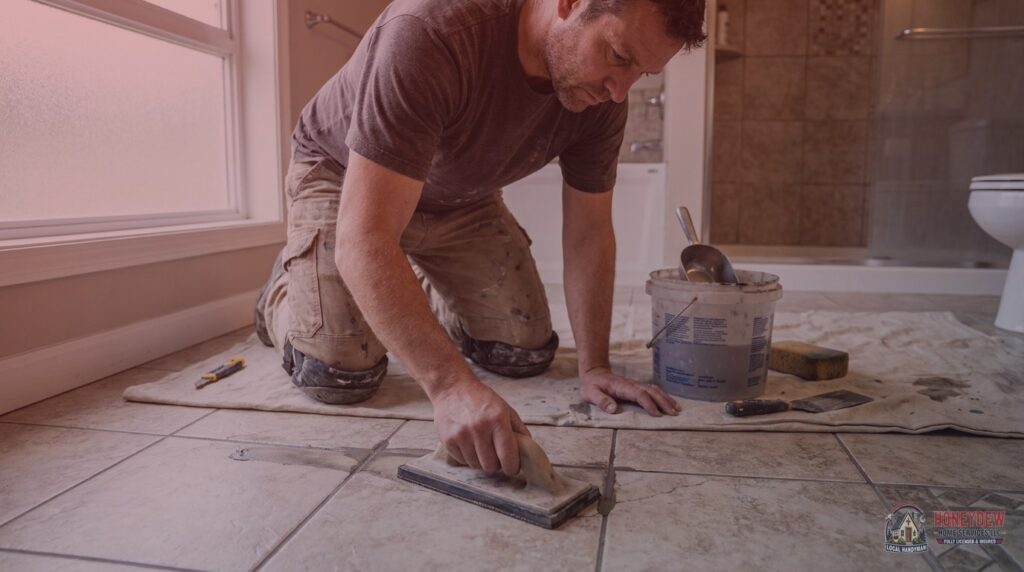
Kenny Neville provides licensed residential tile repair and grout services to Middle Georgia homeowners, covering cracked tile replacement, grout resealing, and bathroom and kitchen tile repairs. Cracked, loose, or stained tile produces some of the most common repair requests Kenny Neville receives in Middle Georgia bathrooms and kitchens. Kenny Neville handles everything from a single cracked tile replacement to a full grout resealing, without the cost or wait of a specialty tile contractor.
What tile repair and grout services does Kenny Neville provide?
Kenny Neville provides cracked and loose tile replacement on floors, walls, and backsplashes, plus grout resealing and repointing in bathrooms and kitchens. Kenny Neville is a licensed residential handyman serving Middle Georgia, including homeowners in Griffin, GA and McDonough, GA.
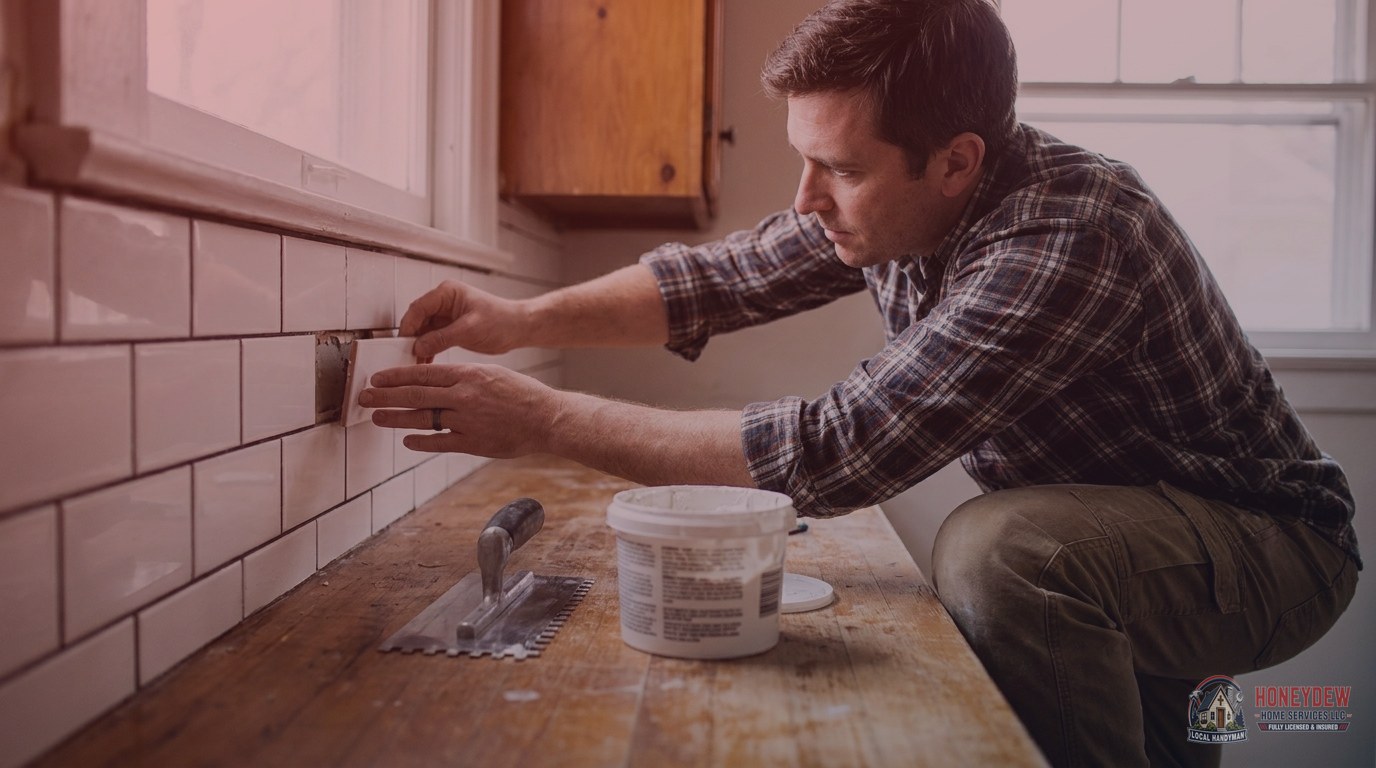
Cracked and loose tile replacement covers floors, walls, and backsplashes throughout the home. Kenny Neville removes the damaged tile, inspects the substrate beneath it, and sets a matching replacement so the repair blends into the existing field. A loose tile usually points to a failed bond or a flexing surface underneath, and patching only the top layer leaves the real problem in place.
Grout resealing and repointing restores the joints between tiles. Tile repair and grout resealing is a core residential handyman service covering bathrooms, kitchens, and floors. Kenny Neville removes crumbling grout, repoints the joints, and applies sealer so moisture stays out of shower walls, tub surrounds, and kitchen counters. The Ceramic Tile Foundation’s 2024 TCNA Handbook for Ceramic, Glass, and Stone Tile Installation classifies grout types and environmental exposure ratings, and those classifications determine which grout belongs in a steamy shower versus a dry backsplash.
As a licensed residential handyman, Kenny Neville completes small and mid-size tile repairs without specialty contractor markup. Most tile repair jobs involve a handful of damaged tiles or a run of failing grout rather than a full installation, so handyman pricing fits the actual scope of the work. Homeowners in Griffin, GA and McDonough, GA can hire one licensed professional for the repair instead of paying a tile contractor’s project minimums.
Tile repair and grout services sit within Kenny Neville’s broader Home Repair Services work, so a single visit can combine tile repair with adjacent fixes. The complete home fix-it services cover drywall, trim, and carpentry alongside tile, while the glass and sash repair services handle cracked windowpanes and failed glazing as a separate trade. The tile repair cost guide breaks down what drives price: tile material, the extent of the damage, and grout condition. The kitchen backsplash tile repair in McDonough addresses the grease, heat, and moisture exposure that loosen tiles behind ranges and sinks.
How does Kenny Neville repair cracked or loose tiles?
Kenny Neville repairs cracked or loose tiles in four steps: diagnose what caused the failure, source a replacement tile that matches, remove the damaged tile without harming adjacent tiles, and re-adhere, level, and grout the new tile to blend with the existing finish.
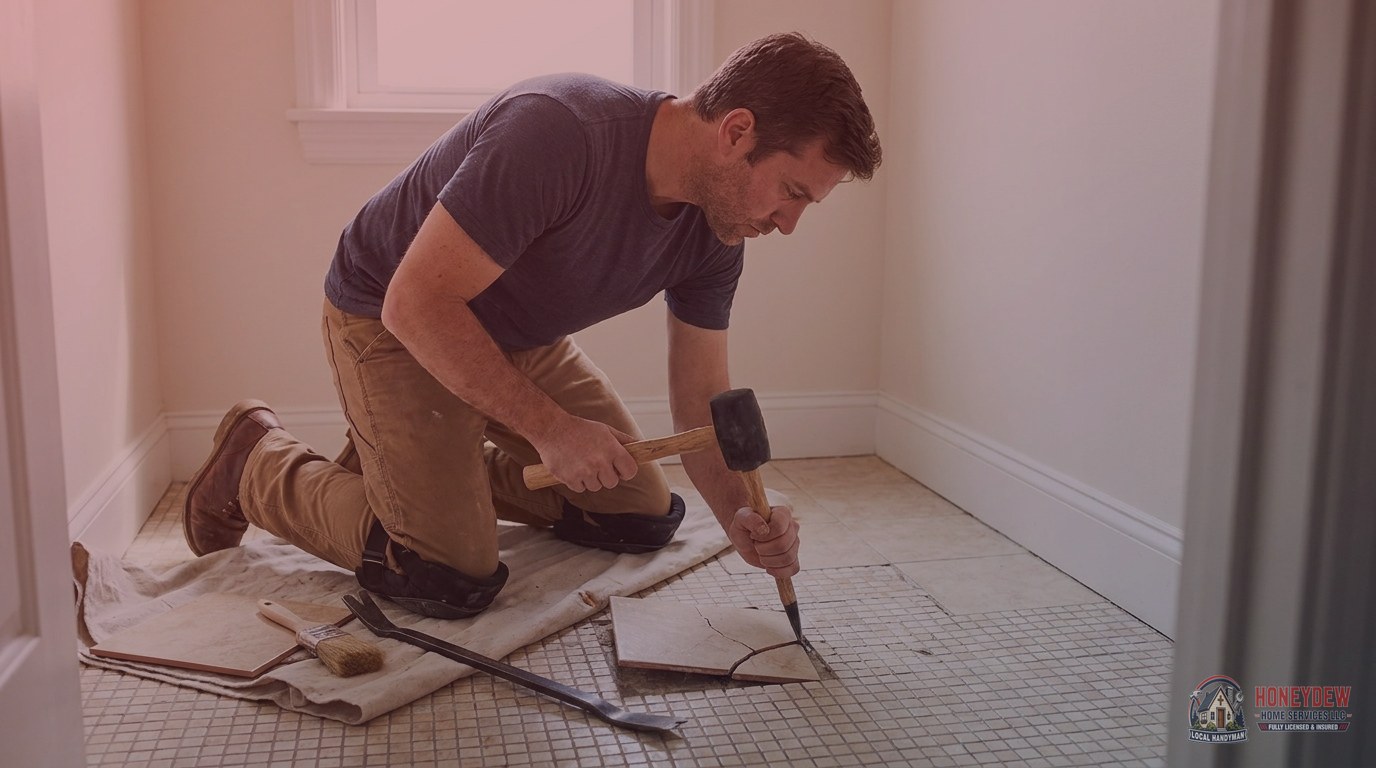
1. Diagnose the cause. A cracked tile is caused by substrate movement, impact, or moisture intrusion beneath the tile. According to SF Gate’s Home Guides, a wood subfloor swells in high humidity and shrinks as moisture wanes, loosening the adhesive bond and cracking grout. Per Mosaicenter’s 2025 summary of TCNA guideline EJ171, properly placed movement joints let installations expand and contract, preventing the same cracking, tenting, and grout failure.
2. Source a matching tile. Kenny Neville matches color, size, and finish before scheduling the repair. Replacing a single cracked tile without matching the existing tile is the most common failure point in DIY tile repair, and sourcing a matching or complementary tile locally up front avoids the patch that looks worse than the crack.
3. Remove the damaged tile. Kenny Neville cuts the grout around the cracked tile and lifts it without chipping neighboring tiles or gouging the backer board. The exposed setting bed also reveals whether improper original installation caused the failure: the Tile Council of North America’s 2026 ANSI A108.02 standard requires 95% thinset coverage on the tile back in wet areas.
4. Set, level, and grout the replacement. Kenny Neville beds the new tile in fresh thinset, levels it flush with the surrounding tiles, and applies grout matched to the existing color and finish.
The moisture damage to tile surfaces explains how water intrusion weakens tile bonds over time, and the cracked tile replacement in Griffin, GA covers scheduling for that service area. Kitchen backsplash repairs follow the same diagnostic and matching process as floor and wall tile, with one addition: grease buildup on adhesive surfaces must be cleaned before new tile can bond, a detail the Kitchen Backsplash Tile Repair in McDonough, GA covers for that market.
When should homeowners reseal or replace grout — and what does the service include?
Homeowners should reseal grout when the sealer wears down but the grout stays intact, and replace grout when sections crack, crumble, discolor, or go missing. Kenny Neville’s grout service removes the failed material, repoints the joints, color-matches the new grout, and seals the finished surface.
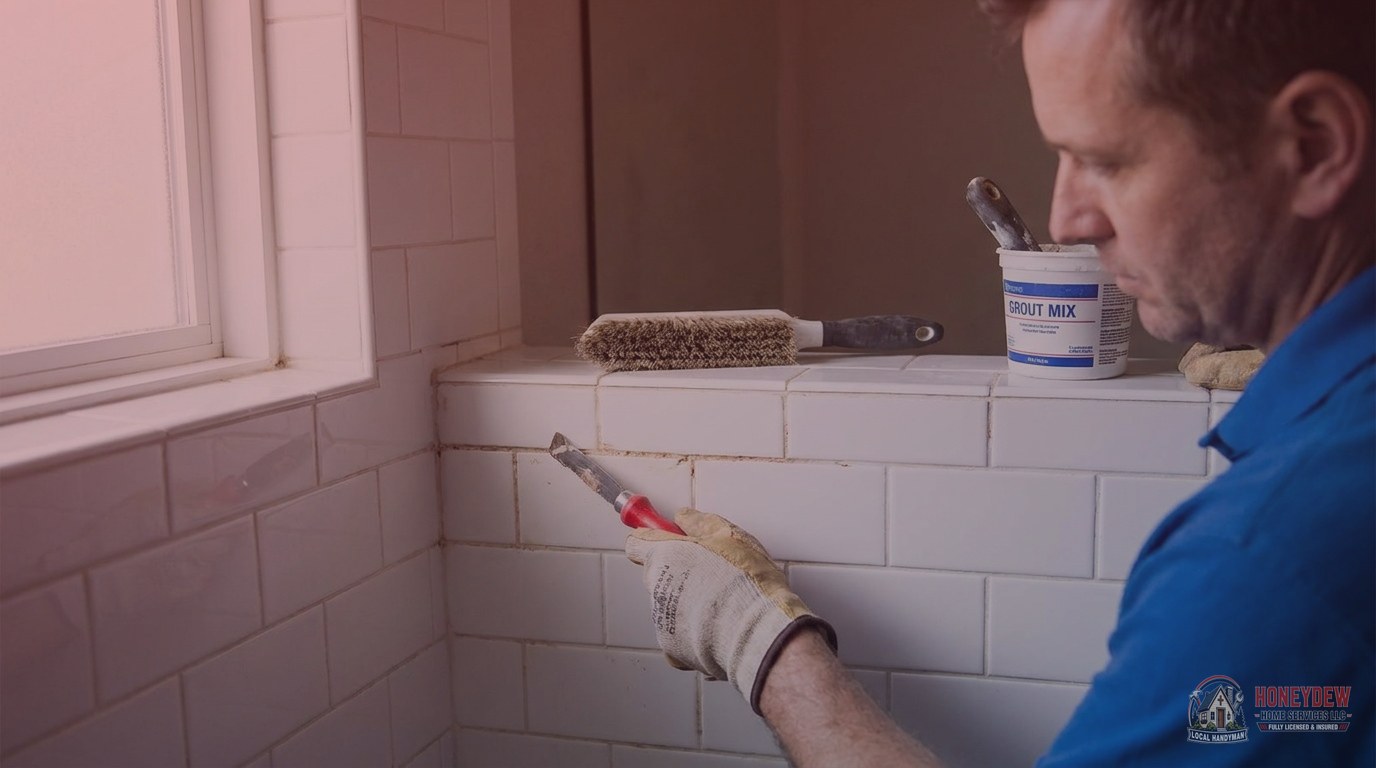
Crumbling, discoloration, cracking, and missing sections signal grout failure, not surface dirt. Resealing does not stop active water intrusion: sealing over cracked or missing grout traps moisture inside the joint and accelerates substrate rot. The correct sequence is removal of failed grout, repointing, then sealing, a sequence most surface-level cleaning services skip. The service includes grout color matching so repointed joints blend with the surrounding installation. Cement-based grout specified under ANSI A118.6 and A118.7 is inherently porous and absorbs water, oils, and biological material regardless of whether the adjacent tile is sealed, according to the National Tile Authority (2025). TCNA guidelines also recommend a minimum 72-hour cure before new grout accepts sealer.
Georgia’s climate accelerates that porosity problem. Georgia has a humid subtropical climate with long, hot, humid summers and short, mild winters, according to NOAA/NCICS (2022). Macon averages 87% relative humidity in the morning and 71% across the day, Current Results reports. Georgia humidity, thermal cycling, and missed resealing maintenance cause most grout failure in Middle Georgia homes. Grout resealing done on schedule precedes mold infiltration and full tile substrate damage, blocking both problems before water reaches the substrate. The grout resealing and cleaning guide covers inspection timing and safe cleaning methods for grout that remains intact.
Shower grout failure carries more urgency than floor grout failure because cracked or missing joints in a wet shower enclosure let water behind the wall assembly, where water can rot framing within months. Homeowners who spot cracking or missing shower grout should not delay an assessment. Kenny Neville also advises homeowners on when to use caulk vs grout, because corners and tub edges need flexible caulk rather than rigid grout.
Should You Repair Individual Tiles or Retile the Whole Area?
Repair individual tiles when damage is limited to a few cracked or loose tiles and the backer board beneath is dry and intact. Retile the whole area when moisture damage, widespread cracking, or failing adhesive affects multiple tiles across the surface.
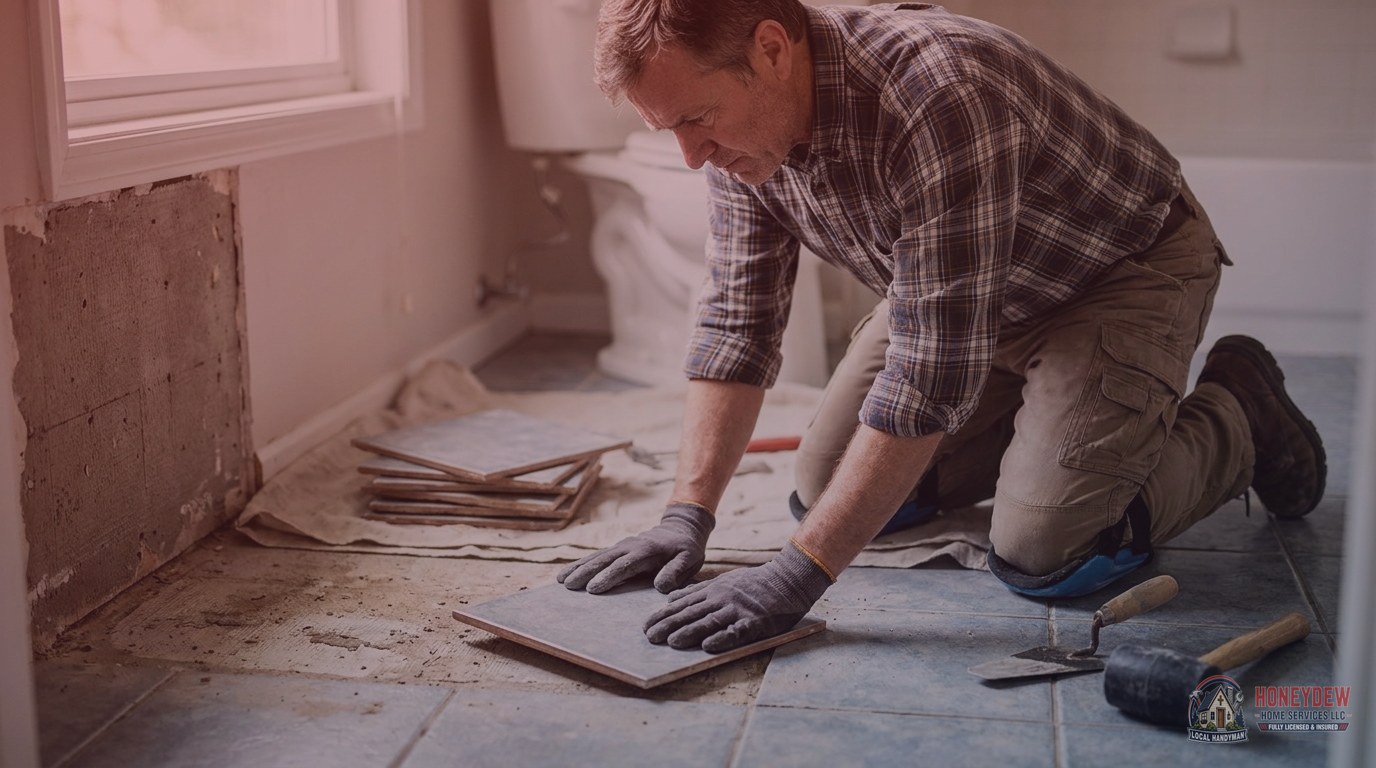
Spot tile repair applies to isolated cracks or loose tiles where the substrate is intact. A single cracked ceramic tile or one hollow-sounding floor tile comes out, the thinset bed gets refreshed, and a matching replacement goes in without disturbing the surrounding field.
Full retile applies to widespread failure, water-damaged substrate, or outdated layouts. When several tiles crack in a repeating pattern, the cause usually sits in the adhesive bed or the board below, and patching one tile leaves that cause in place.
In Middle Georgia’s humid climate, the decision hinges not just on the number of broken tiles but on whether the backer board beneath shows moisture damage. That condition cannot be judged from the tile surface alone; a licensed handyman probes grout lines and lifts a tile to check for softness, swelling, or mold. Slow leaks behind shower walls often go undetected for months, according to iBuyer’s 2026 reporting, and Angi’s 2026 data puts bathroom water damage restoration between $500 and $4,500, so a hidden moisture problem is worth catching before the retile question answers itself.
Kenny Neville inspects the substrate on every tile call and recommends the smaller repair whenever the board is sound, rather than defaulting to the larger job. Homeowners deciding between tile repair and retile can weigh the wet-room version of the choice in Bathroom Tile Repair vs. Full Retile: How to Decide, while the Tile Repair Cost Guide for Middle Georgia Homeowners breaks down pricing for both paths.